Do Shoe Stretchers Work on Sneakers?
Sneakers are everywhere today. People wear them at work, at school, and while traveling. They are no longer just for sports. Comfort is one of the main reasons people choose sneakers. When a pair feels tight, it can quickly become a problem.
Tight sneakers can cause sore toes, foot pain, and blisters. Walking even short distances can feel annoying. Many people look for easy fixes at home. Shoe stretchers often seem like a simple solution. They promise more space without buying new shoes.
But sneakers are not like old leather shoes. They use modern materials and layered designs. Because of this, stretching them is not always simple. Some people see small results. Others end up damaging their shoes. So the real question remains. Do shoe stretchers truly work on sneakers?
This article breaks it all down. You will learn how stretchers work. You will understand sneaker materials better. You will also learn the risks and safer options. The goal is simple. Help you decide what really works.
Table of Contents
How Shoe Stretchers Are Designed To Work
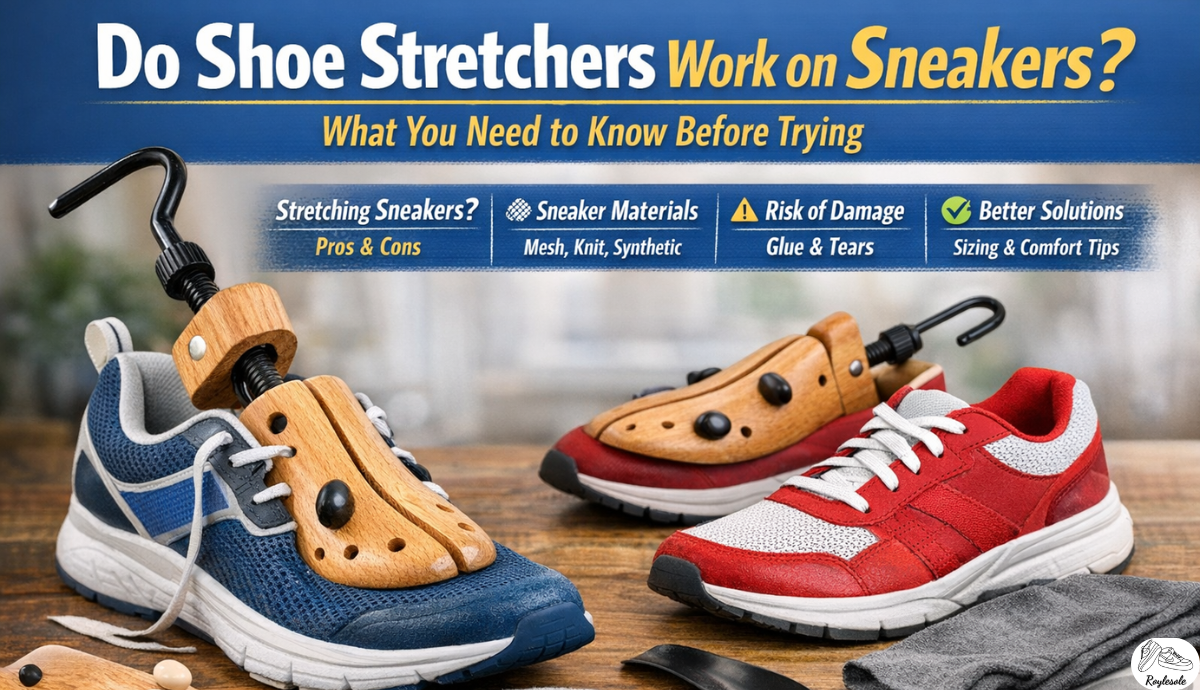
Shoe stretchers are tools placed inside shoes. They slowly push outward. The pressure is controlled and gradual. This pressure helps loosen certain materials over time. That is how they create more space.
Most stretchers use a turning handle. Turning it increases the width or length. Some models include small plugs. These target pressure points, like bunions. Wooden stretchers absorb moisture, which can help soft materials relax.
However, stretchers were made for leather shoes. Leather reacts well to pressure. Sneakers are different. Their materials often resist stretching. This makes the tool less effective in many cases.
Materials Commonly Used In Sneakers
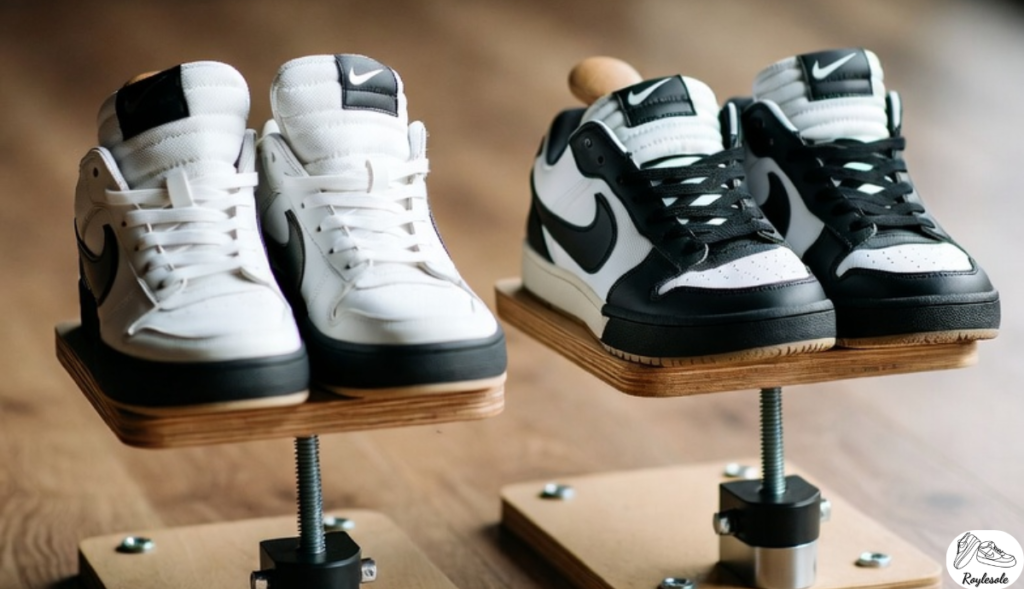
Sneakers use many materials at once. Mesh is common for breathability. Knit uppers are flexible but supportive. Synthetic leather adds structure and style. Rubber makes up the sole.
These materials are chosen for strength and shape. They are not meant to stretch much. Rubber especially resists change. Glue holds layers together tightly. This limits how far stretchers can work.
Some areas may give slightly. Others will not move at all. This mixed response causes uneven stretching. Understanding these materials helps avoid disappointment.
Differences Between Sneakers And Leather Shoes
Leather shoes stretch because leather fibers relax. This happens slowly and naturally. Sneakers focus on stability and performance. They are designed to stay firm.
Sneakers also have thick soles and padding. When stretched, padding often compresses instead. This feels better at first. But the comfort fades after wearing them again.
Leather shoes can be reshaped. Sneakers usually cannot. This is the biggest difference. It explains why stretchers work better on dress shoes.
Types Of Shoe Stretchers Available Today
There are simple width stretchers. There are also two-way stretchers for width and length. Some come with pressure plugs. These help with specific tight spots.
A few stretchers claim to be sneaker-safe. They are rare and not always effective. Cheap plastic models can break easily. Wooden stretchers last longer and feel sturdier.
Professional cobblers use advanced tools. These apply even pressure. DIY methods often cause damage. Tool quality matters more than people think.

Can Shoe Stretchers Increase Sneaker Width?
Width stretching has the best chance of success. Side panels sometimes relax. Knit and canvas sneakers respond the best. Synthetic leather is harder to stretch.
The change is very small. Usually just a few millimeters. This can still reduce pressure and pain. But it will not change the shoe size.
Multiple sessions may help. Patience is required. Too much force causes damage. Slow and gentle use is key.
Can Shoe Stretchers Increase Sneaker Length?
Length stretching rarely works well. Rubber soles do not extend. Toe boxes often contain hard caps. Stretchers cannot push past them.
Most length changes come from padding compression. This is temporary. Once worn, the shoe returns to normal. The shape may even suffer.
Trying to stretch the length can ruin the toe area. This affects both comfort and looks. Length stretching is not recommended.
Risks Of Using Shoe Stretchers On Sneakers
Stretchers can damage sneakers if misused. Glue can loosen. Soles may separate. Mesh can tear. These problems are often permanent.
Sneakers are hard to repair. Damage usually means replacement. Some brands also void warranties after modifications. This adds financial risk.
Using low pressure reduces danger. Still, risk always exists. Knowing this helps you decide wisely.
Professional Alternatives To Shoe Stretchers
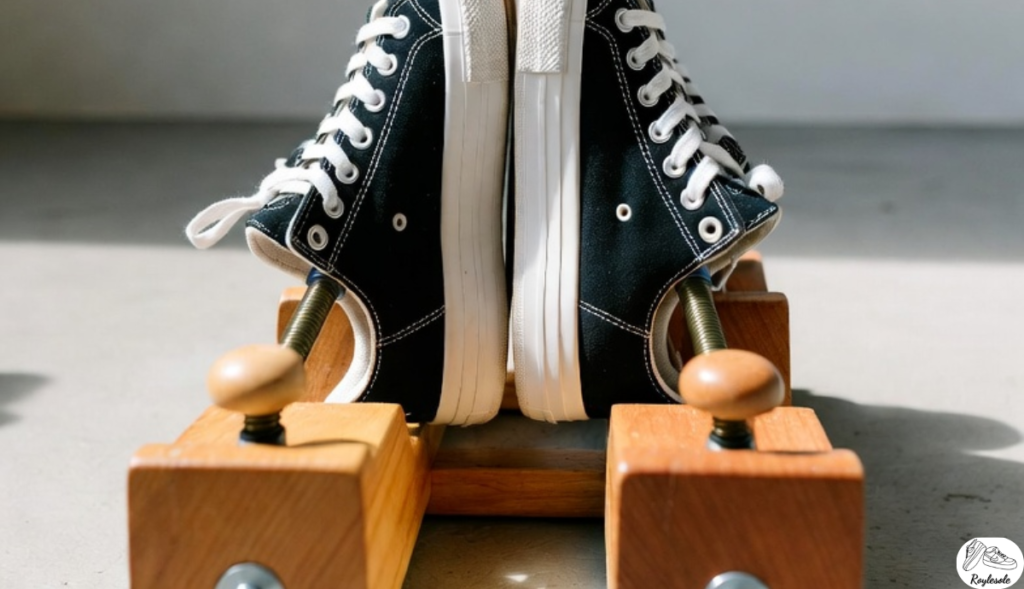
Cobblers sometimes stretch sneakers professionally. They understand materials better. They may use light heat or moisture. Results are still limited.
Other options are often safer. Return or exchange if possible. Use thinner socks. Try different insoles. These changes often help more.
Choosing wide or half-size options is smart. Research brand sizing before buying. Prevention works better than fixing mistakes.
When Shoe Stretchers Might Actually Help Sneakers
Stretchers may help casual sneakers. Soft uppers respond better. Knit and canvas styles work best. Small pressure can ease tight spots.
They work best during break-in periods. Results are slow and subtle. Always stop if resistance appears. Damage happens fast when ignored.
Stretchers are not miracles. They are small tools for small problems. Knowing this avoids frustration.
Expert Opinions And Consumer Experiences
Most experts advise caution. They point out material limits. Many warn against home stretching. Especially for performance sneakers.
Consumer reviews are mixed. Some feel relief. Others regret trying. Results depend heavily on sneaker type.
Brands usually discourage stretching. Sneakers are designed for exact fits. Most experts agree. Exchanges work better.
FAQ’s
Do shoe stretchers damage sneakers permanently?
Yes, damage can happen if too much force is used or materials resist stretching.
Are shoe stretchers safe for knit sneakers?
They are safer for knit uppers but still require slow and gentle use.
Can shoe stretchers make sneakers one size bigger?
No, they only provide very small width changes, not full-size increases.
How long should stretchers stay inside sneakers?
Around twelve to twenty-four hours per session is usually safest.
Is professional stretching better than home stretchers?
Yes, professionals reduce risk by using controlled methods and experience.
Conclusion
Shoe stretchers offer limited help for sneakers. They may ease slight width tightness. They do not work well for length. Materials and design limit success.
Buying the right size is the best solution. Exchanges and professional advice help more. Stretchers can work in rare cases. Use them carefully and patiently





Post Comment