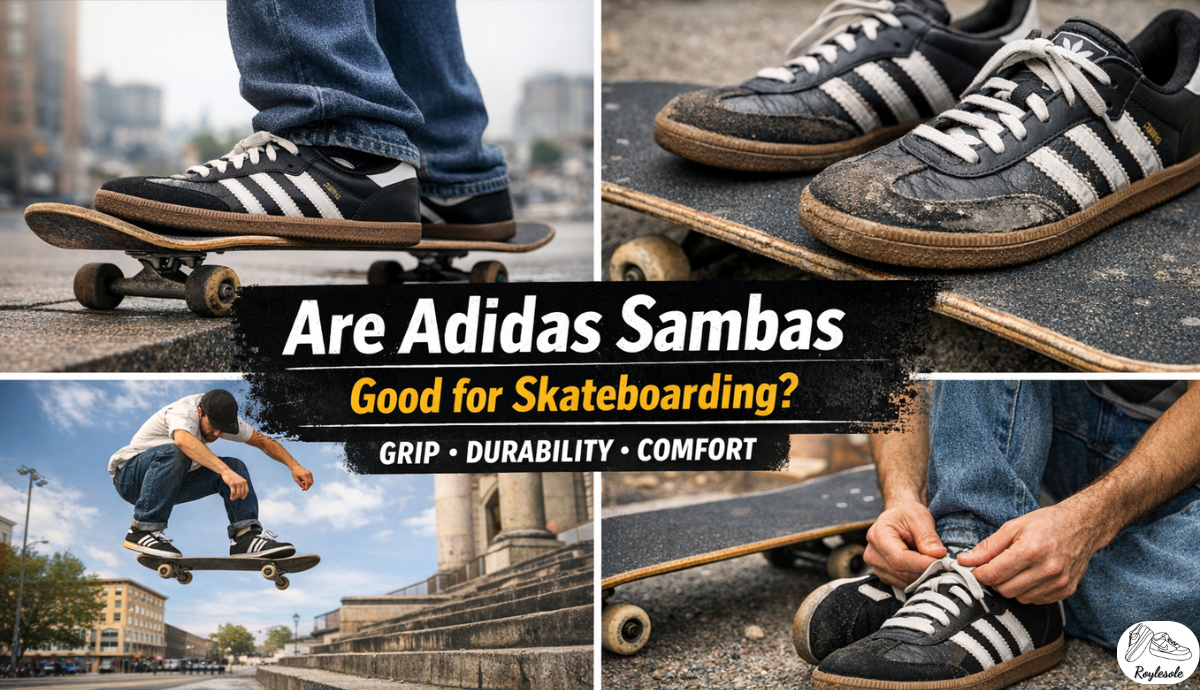
Are Adidas Sambas good for skateboarding?
Whether Adidas Sambas perform well for skateboarding. Sneakers matter greatly because skating demands balance, grip, comfort, durability, and control. Many skaters question classic shoes compared with modern skate designs. Adidas Sambas began as soccer shoes but crossed into street culture. Their look is iconic, yet their function for skating remains debated.
Skateboarding stresses shoes differently than walking, running, or casual wear. Boards scrape soles, bend uppers, and punish weak stitching quickly. Good skate shoes protect feet while offering board feel control. Sambas use leather uppers and flat rubber soles traditionally. These traits sound promising, yet skating requires more specialized support.
This guide breaks down comfort grip, durability, protection, and skating performance. It uses simple language, clear points, and real skating needs. Readers will learn strengths, limits, and smart use cases. The goal helps skaters choose wisely without hype confusion. Let us examine Sambas honestly through practical skating lenses.
Table of Contents
History and Design of Adidas Sambas
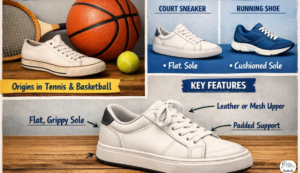
Adidas Sambas started in soccer to handle icy, hard surfaces. Adidas Sambas’ thin profile improved touch control, traction, and quick movements. Adidas Sambas Designers chose leather uppers for durability, flexibility, and protection. Adidas Sambas. The gum rubber sole provided grip on smooth indoor fields. This foundation significantly influences skating performance even today.
Adidas Sambas keep a low-cut shape, supporting ankle movement freedom. Skaters often like low shoes for flexibility and board control. The narrow fit hugs feet, offering responsive, precise movement. However, padding remains minimal compared with skate-focused shoes. This design choice affects comfort during long, aggressive sessions.
Sole Grip and Board Feel
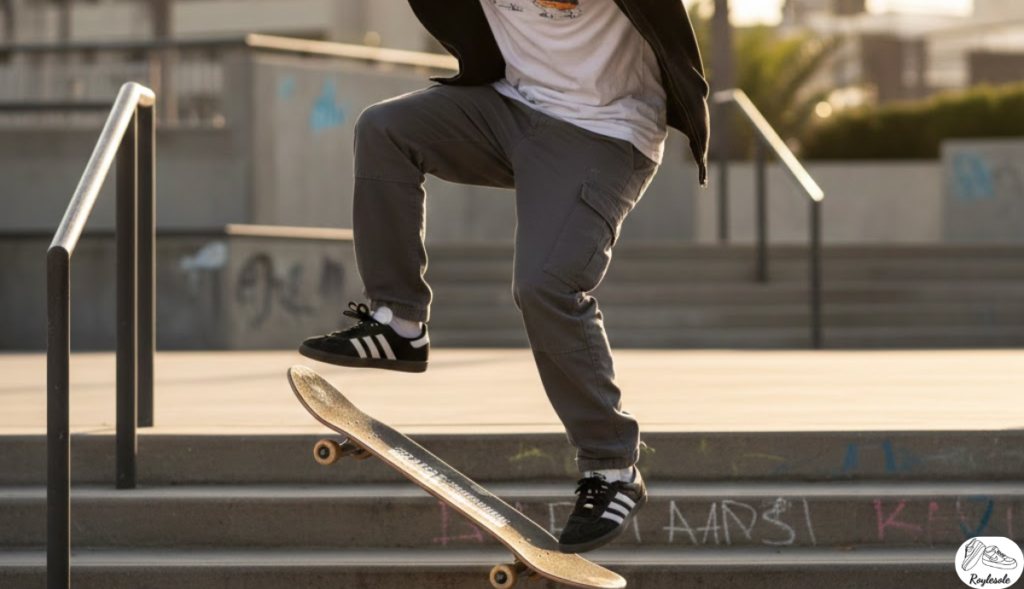
Grip matters most because slipping ruins tricks’ confidence, safety, and speed. Samba gum soles feel sticky on skateboard grip tape surfaces. They allow smooth slides while still stopping feet securely. Board feel remains excellent because soles stay thin and flexible. Skaters can sense deck movements easily while performing tricks.
However, thin soles mean less shock absorption on big landings. Street skating, flat ground suits Sambas better than big drops. Vert skaters may feel foot pain from repeated impacts. Modern skate shoes often include cushioning layers for protection. Samba’s trade impacts safety for precision and feel.
Durability of Materials
Leather uppers resist tearing better than canvas alternatives usually. Ollie’s drag shoes hard against the grip tape edges. Samba’s leather handles abrasion longer than lightweight casual sneakers. Stitching quality remains strong, but not reinforced for skating. Eventually, leather thins where flick motion repeats constantly.
The sole bonds well but lacks extra toe cap reinforcement. Modern skate shoes add rubber layers around high-wear zones. Without protection, Sambas wear faster under daily skating stress. Casual or light skating extends their lifespan noticeably. Heavy skaters may replace them more often than expected.
Comfort During Skating Sessions
Comfort depends on fit, padding, breathability, and shock absorption. Sambas feel snug, which many skaters enjoy for control. Minimal padding keeps feet close to the board, improving responsiveness. However, long sessions cause foot fatigue more quickly than cushioned shoes. Flat insoles offer little arch or heel support.
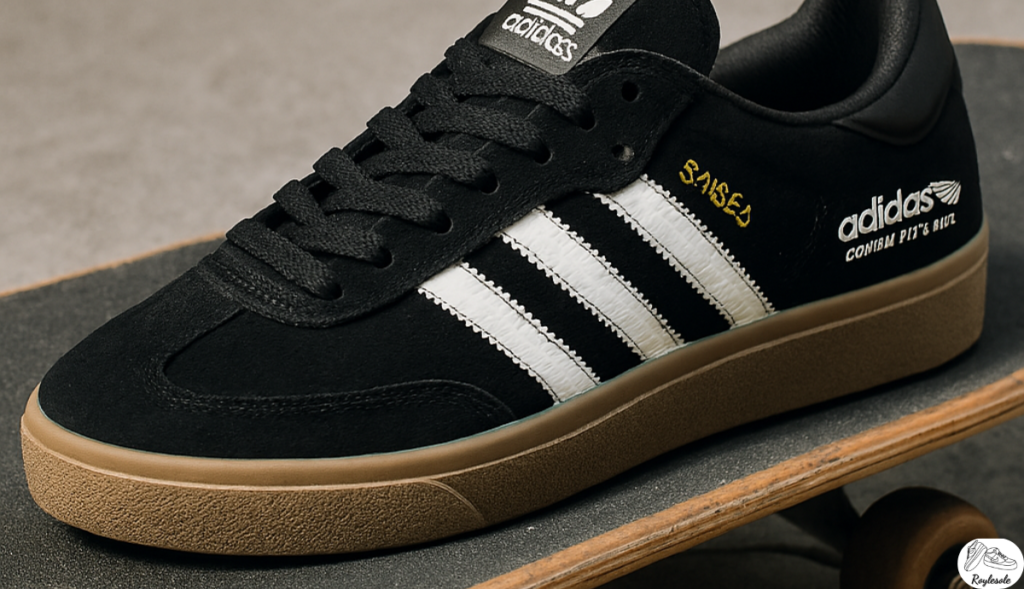
A break in time helps the leather soften and adapt to shape. After breaking in, comfort improves for casual cruising sessions. Standing on boards for long hours still strains the feet eventually. Adding aftermarket insoles improves comfort without ruining board feel. This tweak makes Sambas more session-friendly.
Ankle Support and Protection
Low-cut shoes allow ankle movement helpful for tricks. Sambas provide freedom but minimal ankle protection against rolls. Beginners might prefer higher collars for added confidence and safety. Experienced skaters often accept risk for better flexibility control. Thus, ankle support becomes a personal preference choice.
Toe protection matters because failed tricks frequently smash shoes. Samba’s leather guards toes better than thin fabric sneakers. Yet no reinforced cap exists for repeated high-impact hits. Skate-specific shoes often add rubber layers here. Sambas offer moderate protection, not maximum safety.
Weight and Flexibility
Light shoes reduce leg fatigue during long skating days. Sambas stay relatively light compared with bulky skate shoes. Flexibility allows natural foot movement and easier flip tricks. The sole bends easily, aiding technical street skating styles. This makes Sambas feel responsive and lively underfoot.
Too much flexibility reduces stability during hard landings sometimes. Skaters doing gaps, stairs, or bowls may feel unstable. Rigid skate shoes offer more structure for impact resistance. Again Sambas favor technical ground tricks over big impacts. Style of skating determines whether flexibility helps or hurts.
Style and Street Versatility
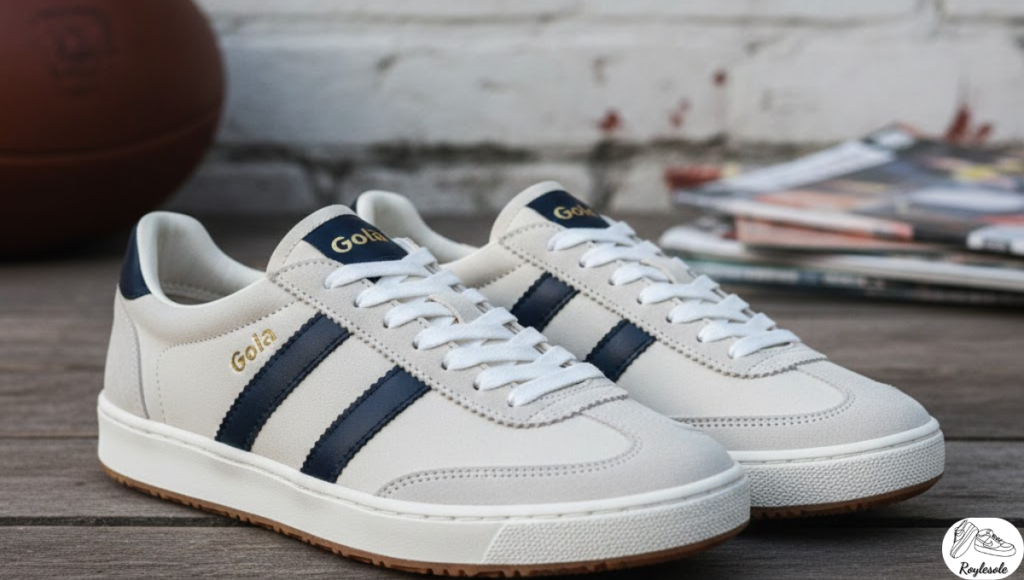
Sambas look clean, classic, and match many outfits easily. Skaters often wear shoes daily beyond skating sessions. This versatility saves money and keeps style consistent. You can skate and then walk through social spaces comfortably. Many skate shoes look bulky or too sporty.
Their timeless design appeals across ages, cultures, and scenes globally. Wearing Sambas avoids screaming skate shoe stereotypes loudly. Some skaters appreciate blending fashion with function subtly. However, style should outweigh safety or performance needs. Choose looks after confirming skating comfort and protection.
Comparison With Skate Specific Shoes
Skate shoes include padding, reinforcements, cushioning, and board-focused shapes. They last longer under abuse and protect feet better. Brands design them specifically for ollies, flips, slides, and impacts. Sambas lack many of these specialized protective features. Therefore performance gap appears during aggressive skating routines.
Yet skate shoes often feel bulky, heavy, and stiff initially. Sambas feel natural right away for many skaters. Some skaters value board feel more than protection layers. Thus, preference varies based on skating style and risk tolerance. No shoe suits every skater equally, always.
Who Should Skate Adidas Sambas
Casual skaters cruising streets or practicing flat tricks benefit. Technical skaters enjoy board feel, flexibility, and a slim profile. Fashion-focused skaters like wearing one shoe everywhere daily. Lightweight skaters stress shoes less, extending lifespan. These users find Sambas enjoyable and practical.
Beginners learning basics may appreciate simplicity and control. However, those skating stairs, gaps, and bowls need stronger protection. Heavier skaters may destroy Sambas quickly due to friction. Competitive skaters usually choose dedicated skate shoes instead. Assess personal needs honestly before choosing Sambas.
Maintenance and Care Tips
Proper care extends shoe life, especially for skating use. Rotating shoes, letting them dry between sessions, prevents breakdown. Clean the grip tape dust often to reduce abrasion damage. Use shoe glue early on peeling areas promptly. Small repairs prevent bigger failures later.
Consider applying toe caps or protective patches externally. These add durability without changing the shoe feel dramatically. Replace insoles when flattened to maintain comfort and support. Avoid soaking leather, which weakens its structure over time. Care makes Sambas last longer and skate better.
FAQ’s
Are Adidas Sambas designed specifically for skateboarding performance needs?
No, they were designed for soccer, not modern skateboarding demands. They lack padding reinforcement and impact-focused construction. However, they still perform decently for light skating styles. Design intent differs, but function overlaps somewhat.
Do Adidas Sambas provide enough grip for skateboard tricks?
Yes, gum rubber soles grip skateboard tape very well. They allow controlled slides while maintaining stopping power. Board feel remains strong due to the thin, flexible soles. Grip rarely becomes a major issue.
How long do Adidas Sambas last when used for skating?
Lifespan depends on skating intensity, frequency, and style. Casual skaters may get months of regular use. Aggressive skaters may wear through leather quickly. Care and repairs extend lifespan significantly.
Are Adidas Sambas comfortable for long skateboarding sessions?
They feel comfortable initially with a snug, responsive fit. Minimal padding causes foot fatigue during long sessions. Aftermarket insoles help improve comfort noticeably. They suit shorter sessions better.
Should beginners choose Adidas Sambas for learning skateboarding?
Beginners can use them, but should be cautious. They offer good control but limited protection and support. Higher-padded skate shoes feel safer for learning falls. Choice depends on comfort, confidence, and skating environment.
Conclusion
Adidas Sambas can work for skateboarding under specific conditions. They offer excellent board feel, grip, and classic style appeal. Leather uppers handle abrasion reasonably well for light skating. Comfort remains acceptable but limited for long, intense sessions. Protection lacks compared with modern skate shoe designs.
Choose Sambas if you skate casually and value simplicity. Avoid them for heavy impact skating or high-risk tricks. Understanding your skating style ensures better shoe satisfaction. No shoe is perfect; it is only suitable for certain needs. Sambas succeed when used realistically and thoughtfully.

Post Comment