Is Puma on the boycott list? Facts, Myths, and the Current Reality
Many people ask whether Puma appears on boycott lists today. This question matters because shoppers want honest and responsible brand choices. The boycott list often reflects public concern about ethics, politics, or business actions. Puma is a global sports brand with fans across many countries. Understanding boycott claims requires facts, balance, and careful review.
Social media spreads boycott calls quickly without providing full context. Some claims stem from misunderstandings, while others arise from actual company actions. People want simple answers, but situations are rarely simple. This article explains whether Puma is officially on the boycott list. It also explains why such questions keep appearing online.
We explore facts, history, public statements, and trusted reporting sources. This helps readers decide based on knowledge, not rumors. Boycotts affect workers, customers, and companies in many ways. Clear information helps people act with confidence and fairness. Let us carefully examine the Puma and boycott list discussions worldwide.
Table of Contents
What a Boycott List Means
A boycott list is a refusal to buy or support something. A boycott list to show protest against actions they dislike. Boycotts can target brands, countries, events, or individuals. They often spread through communities, activists, or online platforms. Some boycotts last briefly while others continue for years.
Boycotts are not always official or organized by large groups. Sometimes small movements grow quickly through shared posts online. Other times, respected organizations announce formal boycott campaigns. Understanding who calls for a boycott is very important. Not every online claim represents a widely supported boycott.
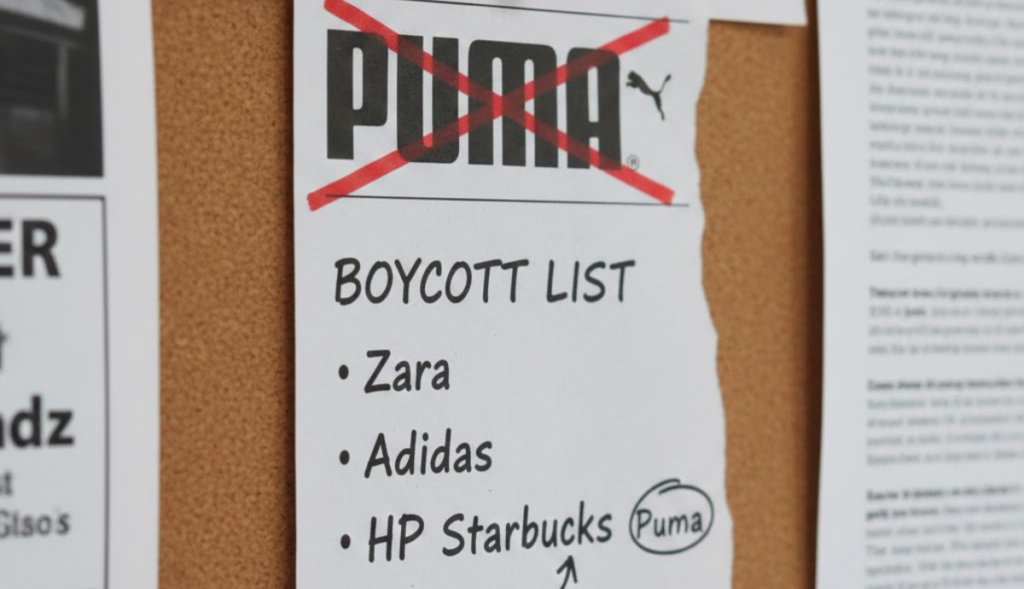
Why Puma Gets Mentioned In Boycott Talks
Puma often appears in discussions linked to political conflicts. Most mentions relate to past sponsorships or business partnerships. These connections raised concerns among activist and advocacy groups. Social media amplified these concerns without full background details. This confused regular customers and sports fans.
Some people assume any criticism equals an official boycott. That assumption is often incorrect and misleading. Criticism can exist without a formal boycott campaign. Understanding this difference helps avoid rushed decisions. Puma mentions often fall into this misunderstood category.
Official Boycott Lists And Puma
Major boycott lists are published by known advocacy organizations. These lists usually name brands after detailed research and statements. As of now, Puma does not appear on major global boycott lists. No unified international boycott campaign officially targets Puma today. This is important when evaluating online boycott claims.
Some regional groups may express disagreement with Puma’s actions. However, disagreement does not always equal an official boycott. Official lists require clear calls, goals, and leadership. Without these elements, claims remain informal opinions. Puma currently lacks inclusion on recognized boycott databases.
Puma’s Public Statements And Responses
Puma has released statements addressing political and ethical concerns. The company states it follows international laws and ethical guidelines. It has ended or adjusted partnerships when concerns were raised. These actions show responsiveness rather than silence or denial. Public responses matter when evaluating boycott fairness.

Companies can make mistakes and later correct them. Many observers note Puma’s willingness to review decisions. This does not mean everyone agrees with Puma’s actions. But it shows engagement rather than avoidance. Such behavior affects boycott discussions significantly.
Role Of Social Media In Boycott Claims
Social media plays a huge role in spreading boycott messages. Posts often lack sources, dates, or verified information. Emotional language spreads faster than careful explanations. This can make issues seem larger than reality. Puma boycott claims often spread this way.
People share posts to show support without checking facts. This creates repeated messages that feel authoritative. Algorithms push popular posts regardless of accuracy. Readers must pause and verify information independently. Critical thinking helps avoid misinformation online.
Regional Versus Global Boycotts
Some boycott calls are limited to specific regions or communities. These may reflect local political or cultural concerns. A regional boycott does not equal a global movement. Puma sometimes appears in region-specific criticism discussions. This distinction is often lost online.
Global boycotts involve multiple countries and organized leadership. They issue clear demands and public statements. Puma does not currently face such a coordinated effort. Understanding scale prevents exaggerated conclusions. Context always matters in boycott evaluations.

Impact Of Boycotts On Workers And Communities
Boycotts affect more than just company profits. They also impact factory workers and retail employees. Many workers depend on steady brand operations. Sudden boycotts can cause unintended hardships. This adds complexity to ethical decision-making.
Some activists consider worker impact before calling boycotts. Others focus mainly on political or symbolic pressure. Both perspectives exist and deserve consideration. Puma employs thousands across different countries. Any boycott would affect many ordinary families.
How Consumers Can Make Informed Choices
Consumers should research before supporting or joining boycotts. Reliable sources include established organizations and reputable journalism. Avoid relying only on viral posts or short videos. Check dates because situations change over time. Informed choices reflect responsibility and fairness.
Asking questions is better than following online pressure. People can support causes without spreading unverified claims. Responsible shopping includes understanding the full brand context. This approach reduces unnecessary division and confusion. Knowledge empowers better consumer decisions.
Comparing Puma With Other Boycotted Brands
Some brands clearly appear on official boycott lists. These cases involve long documented patterns or serious allegations. Puma’s situation does not match these clear examples. It faces criticism but not official coordinated boycotts. This comparison helps clarify the issue.
Not all controversial brands deserve equal treatment. Each case must be judged individually. Lumping brands together oversimplifies complex realities. Puma remains in a gray discussion area. That matters for honest evaluation.
Current Status Of Puma And Boycotts
Currently, Puma is not officially boycotted worldwide. No major organization calls for avoiding Puma products universally. Online claims often exaggerate or misunderstand facts. This status could change, but remains stable now. Staying updated helps avoid outdated assumptions.
Future actions by Puma could affect public opinion. Consumers should watch official statements and reliable news. Quick judgments often miss important developments. For now, Puma operates without a global boycott status. This conclusion rests on available verified information.
FAQ’s
Is Puma officially on a global boycott list today?
Puma is not officially listed on major global boycott lists. Most claims online are informal and not organization-backed. No unified movement calls for avoiding Puma worldwide. This remains the current verified status. Consumers should verify updates regularly.
Why do people say Puma is being boycotted?
People often cite past partnerships or political concerns. Social media amplifies these concerns quickly. Many posts lack context or updated information. This creates confusion among readers. Understanding sources helps clarify reality.
Are there regional boycotts against Puma?
Some regional groups express criticism or protest. These actions are not global or widely coordinated. Regional concerns differ by local political views. They do not represent worldwide consumer movements. Scale matters when evaluating boycott claims.
Does Puma respond to boycott accusations?
Puma has released statements addressing ethical concerns. The company reviews partnerships when issues arise. This shows engagement rather than silence. Responses influence public perception significantly. Transparency helps reduce misinformation.
Should consumers stop buying Puma products?
That decision depends on personal values and research. Consumers should rely on verified facts. There is no official boycott requiring action. Informed choices are always recommended. Respect different viewpoints when deciding.
Conclusion
Puma is not listed on major official boycott lists today. Most boycott claims come from social media discussions. These claims often lack formal organization or verified sources. Understanding this helps shoppers make calmer decisions. Facts matter more than viral opinions.
Consumers deserve clear information without emotional pressure. Boycotts are serious tools and should be used carefully. Puma remains a debated brand, not an officially boycotted one. Staying informed encourages fair and thoughtful choices. Knowledge leads to better responsibility.


Post Comment