How Are Nike Shoes Manufactured? Step-by-Step Explained
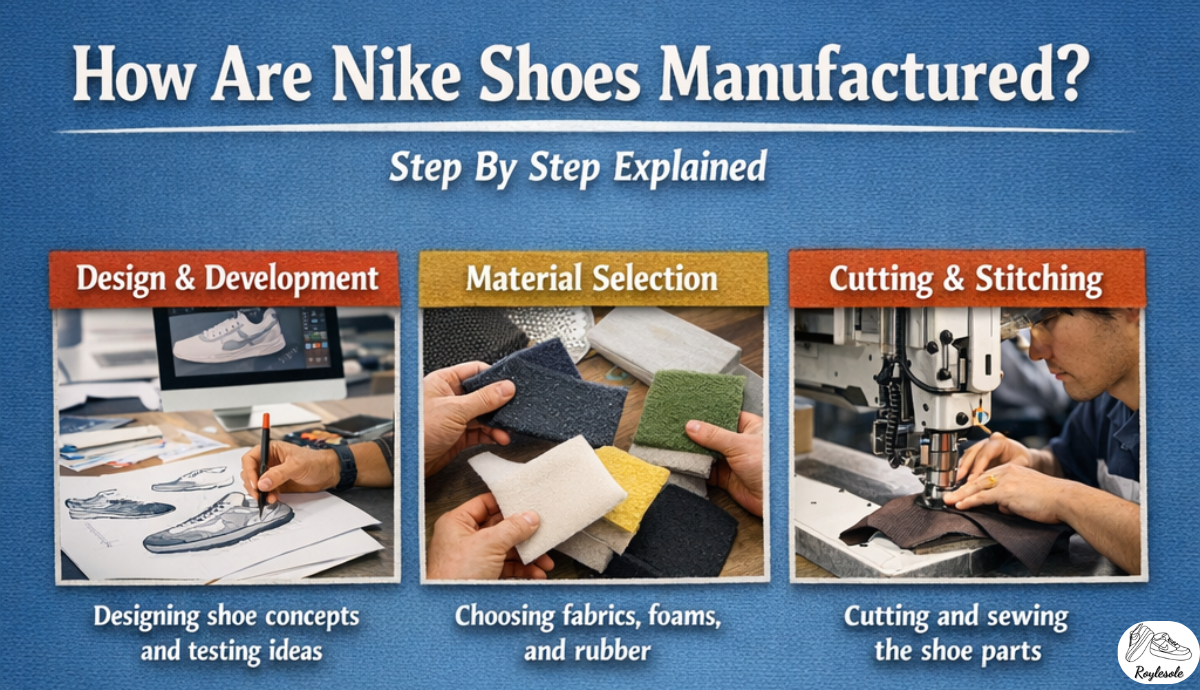
Nike shoes start as ideas built from athletes’ needs. Designers study movement comfort, strength, style, and everyday real use. Nike Shoes Manufactured sketch shapes, test feelings, and imagine strong, helpful shoes. Every idea aims to support feet during sports, work, and play daily. Good shoes must feel light, strong, safe, and last long.
Teams research materials that bend, grip, breathe, and protect feet. Nike Shoes manufactures test fabrics, foams, and rubbers using machines, people, and athletes. Small samples are worn, tested, broken, fixed, and improved again. This careful work helps avoid pain blisters and fast damage. Comfort, safety, and trust guide every early shoe decision.
After designs are ready, factories begin carefully planned production. Many steps follow to build shoes exactly as designed. Workers, machines, and systems all play important roles together. Quality checks happen often during every production stage. This process turns ideas into shoes people love wearing.
Table of Contents
Design And Concept Development
Design begins with listening to athletes’ stories, problems, and goals. Nike teams ask how shoes can help movement better. Nike Shoes Manufactured study running, jumping, cutting, and daily walking patterns. Nike Shoes Manufactured draws many versions before choosing the best ideas. Each drawing slowly becomes a real usable shoe plan.
Computer tools help shape shoes with exact details and sizes. Designers adjust curves, thickness balance, and support zones. They simulate stress impact and bending using digital tests. This saves time and materials before real samples. Strong digital planning improves final shoe comfort and durability.
Material Selection Process
Materials decide how shoes feel and perform. Nike chooses fabrics, foams, and rubbers very carefully. Each material must pass strength, flexibility, and safety tests. Breathable fabrics keep feet cool during long activities. Strong rubbers protect feet and grip surfaces well.
Many materials come from trusted global suppliers worldwide. Nike checks that suppliers follow safety labor environment rules. Materials are tested again after arriving factories. Only approved materials move forward into production lines. This protects workers, users, and brand quality always.
Pattern Making And Cutting
Patterns guide how materials are cut, shaped, and assembled. Experts create patterns for every shoe part carefully. These patterns ensure pieces fit together without waste. Cutting machines slice materials using sharp, guided blades. Accuracy here affects comfort fit and shoe life.
Some cutting uses human skill for special parts. Workers inspect cuts, removing flawed pieces immediately. Good cuts reduce material waste and improve strength. Clean edges help smooth stitching later during assembly. This step sets the foundation for the shoe structure.
Upper Assembly Process
Uppers cover feet and hold the shape style. Pieces are stitched, glued, and layered following pattern guides. Machines sew strong seams with steady, careful speed. Workers check alignment, tension, and stitching quality often. Comfort depends heavily on good upper construction.
Logos are padding laces and loops during this stage. Design details appear, making shoes recognizable and unique. Extra padding protects ankles, heels, and pressure points. Each upper is checked before moving forward. Strong uppers prevent tearing and stretching during use.
Midsole Creation And Cushioning
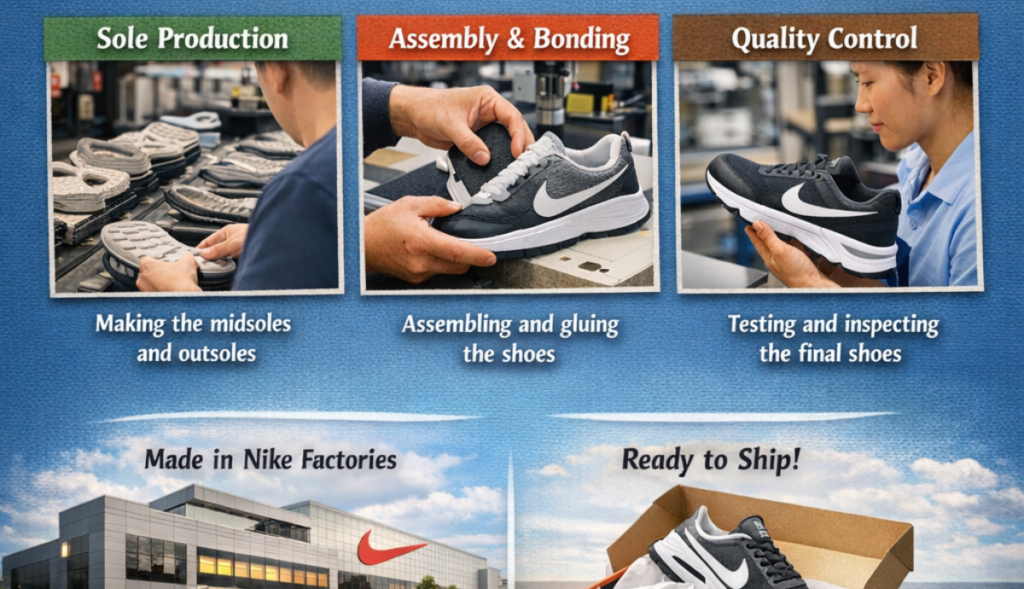
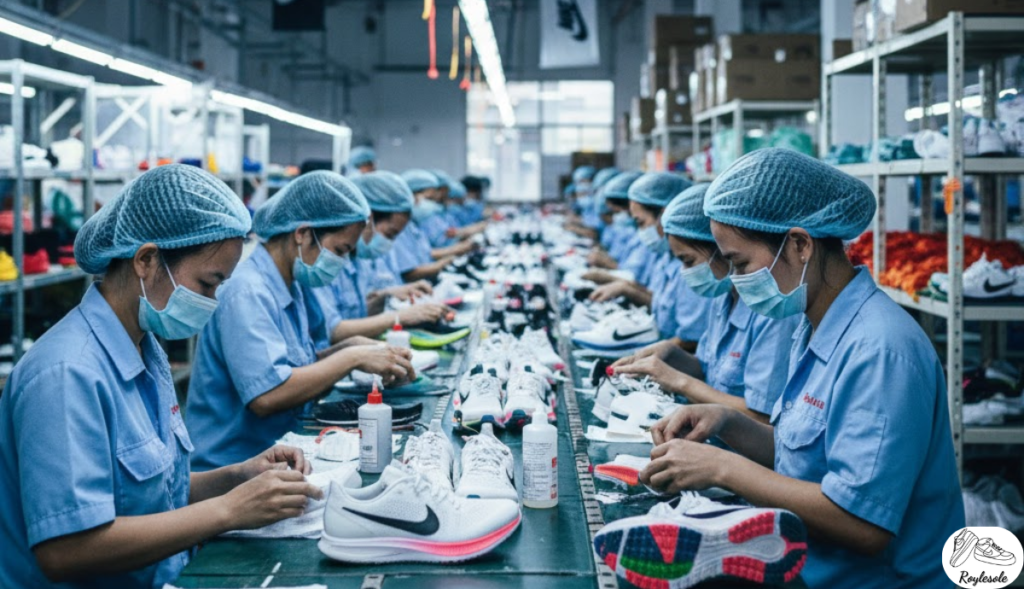
Midsoles absorb impact and support foot movement. Nike uses foam technologies for a soft, responsive feel. Foams are molded, heated, and cooled into exact shapes. Different shoes use different foam blends with different strengths. Running shoes need more bounce, while walking shoes need stability.
Midsoles are tested for compression rebound lifespan. Machines press them thousands of times to simulate steps. Bad foams break down fast and get rejected. Only durable, comfortable midsoles reach assembly. This step protects joints, knees, and backs.
Outsole Manufacturing
Outsoles touch the ground and provide grip protection. Rubber compounds are mixed for strength, traction, and durability. Molds shape rubber into patterns for grip. Different sports need different outsole patterns. Courts, trails, and streets all require special designs.
Outsoles are cured using heat-pressure machines. After cooling, workers inspect the thickness pattern clarity. Grip tests check slip resistance on surfaces. Strong outsoles prevent falls and injuries. They also protect shoes from fast wear.
Shoe Assembly And Bonding
Assembly joins uppers, midsoles, and outsoles together. Strong adhesives bond parts under heat and pressure. Machines press shoes carefully, ensuring full contact. Workers check alignment, balance, and overall shape. Poor bonding causes failure and customer complaints.
After bonding the shoes, rest to let the glue cure. This waiting time ensures long-lasting strength. Workers recheck shoes after the curing finishes. Any defects, send the shoes back for fixing. Only solid shoes continue forward.
Quality Control And Testing
Quality checks happen many times during production. Inspectors look for flaws in stitching, glue, and shape issues. Random pairs undergo bending and pulling impact tests. Shoes must meet safety, comfort, and durability standards. Failed shoes are repaired or destroyed responsibly.
Fit tests ensure sizes match design expectations. Workers wear shoes, walk, run, and move naturally. Feedback helps catch hidden comfort problems early. Quality control protects brand trust and reputation. Customers expect reliable shoes with every purchase.
Packaging And Distribution
Finished shoes are cleaned, polished, and paired. Each pair gets tags, boxes, and information. Boxes protect shoes during shipping, handling, and storage. Nike uses recyclable packaging where possible. This reduces waste and environmental impact.
Shoes ship from factories to global distribution centers. Systems track inventory destinations and delivery timing. Orders move to stores for online customers worldwide. Fast, careful shipping keeps shoes fresh and undamaged. Good logistics ensure happy buyers everywhere.
Sustainability And Innovation Efforts
Nike works reducing waste water energy use. Factories reuse scraps and recycle materials when possible. Some shoes include recycled plastic fabrics. Cleaner production protects the planet’s future generations. Sustainability is an ongoing improvement effort.
Innovation continues with new materials and smart designs. Nike tests lighter, stronger, greener components often. Technology helps measure impact and reduce harm. Small changes across millions of shoes matter. Progress comes step by step steadily.
FAQ’s
How long does it take to make Nike shoes?
Making Nike shoes takes weeks, including design, testing, production, and shipping. Many steps happen across different locations and teams. Time ensures quality, comfort, and durability standards. Fast shortcuts would reduce shoe performance and trust. Careful timing protects product quality.
Where are Nike shoes manufactured mostly?
Nike shoes are made in several countries worldwide. Factories operate mainly in Asia, including Vietnam, China, and Indonesia. Locations are chosen for skills capacity and logistics. Nike monitors factories closely for standards. Production locations may change over time.
Are Nike shoes made by machines or people?
Nike shoes are made using machines and people together. Machines cut molds and press materials precisely. People inspect, assemble, adjust, and check quality. Human skill remains very important always. Balance improves efficiency and reliability.
Does Nike test shoes before selling them?
Yes, Nike tests shoes many times before selling. Tests check comfort, durability, grip, and safety. Athletes and regular people wear test shoes. Machines simulate thousands of step impacts. Only passing shoes reach customers.
Are Nike shoes environmentally friendly?
Nike works to make shoes more environmentally friendly. They use recycled materials and reduce waste. Not all shoes are fully green yet. Efforts improve gradually every year. Sustainability remains an important goal.
Conclusion
Nike shoe manufacturing blends design, science, and skill care. Each step supports comfort, safety, durability, and performance. From ideas to boxes process stays detailed and focused. People and machines work together closely. This care builds trust with wearers worldwide.
Understanding the process shows why shoes cost value. Quality requires time and testing skilled workers. Every pair represents many decisions, checks, and improvements. This effort helps athletes and everyday users alike. Nike shoes reflect thoughtful, careful manufacturing.


Post Comment