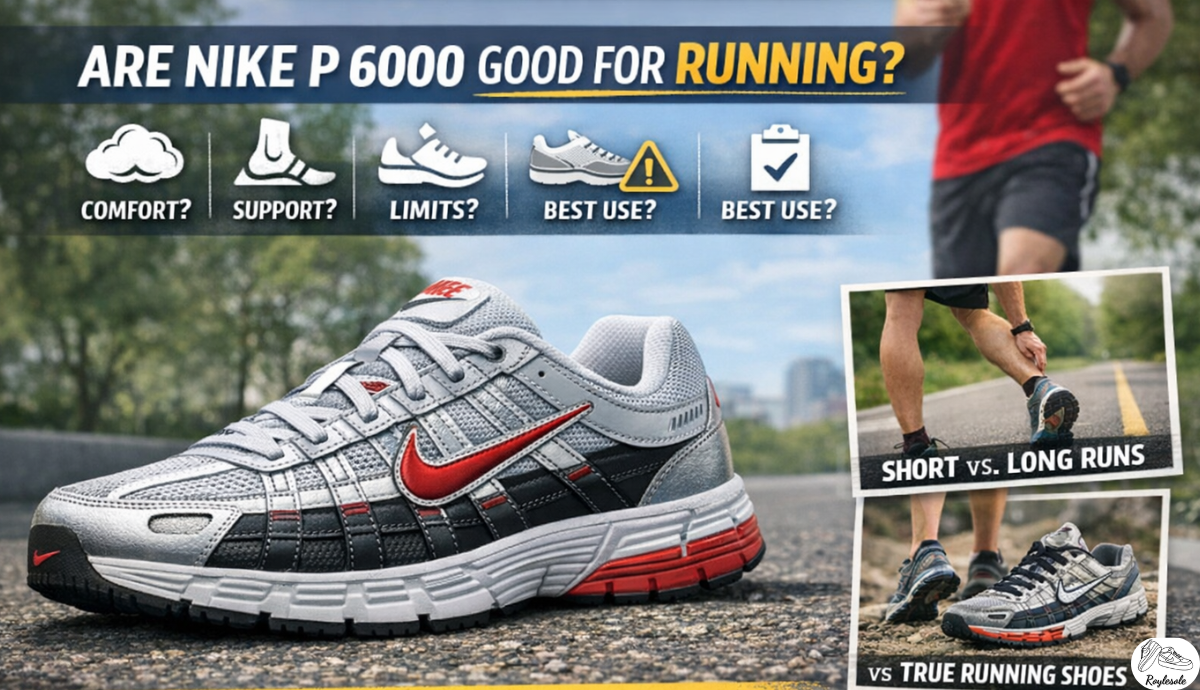
Are Nike p 6000 good for running?
Running shoes matter because comfort, safety, and fit affect daily movement. People ask if Nike P 6000 shoes work well for running. We explore design, comfort, support, and real running use. We keep language simple, clear, and honest for everyday runners. Each section explains facts, feelings, and limits without hype.
Nike P 6000 shoes look sporty, stylish, and inspired by runners. Many buyers wear them for casual walks and school work. Some wonder if style hides true running performance needs. Running shoes need support, grip, cushioning, and good balance. This introduction sets expectations before deeper analysis begins.
We examine short runs, long runs, surface comfort, and durability. We compare design goals with real running demands clearly. We avoid sales talk and focus on practical experiences. You will understand strengths, weaknesses, and best use cases. The goal is informed choice, not hype or fear.
Table of Contents
Design and Visual Intent
Nike P 6000 design draws from early running shoe styles. Mesh panels add breathability while leather overlays add structure. The look feels sporty yet casual for daily outfits. Designers focused on retro appeal more than performance innovation. Visual balance favors street wear more than competitive running use.
The shoe shape feels chunky compared with modern running models. Thick lines and bold layers create a heavy visual feel. This design attracts style-focused buyers, not racers. Running-focused shoes usually appear lighter and sleeker. Design intent affects how shoes perform during runs.
Cushioning and Midsole Feel
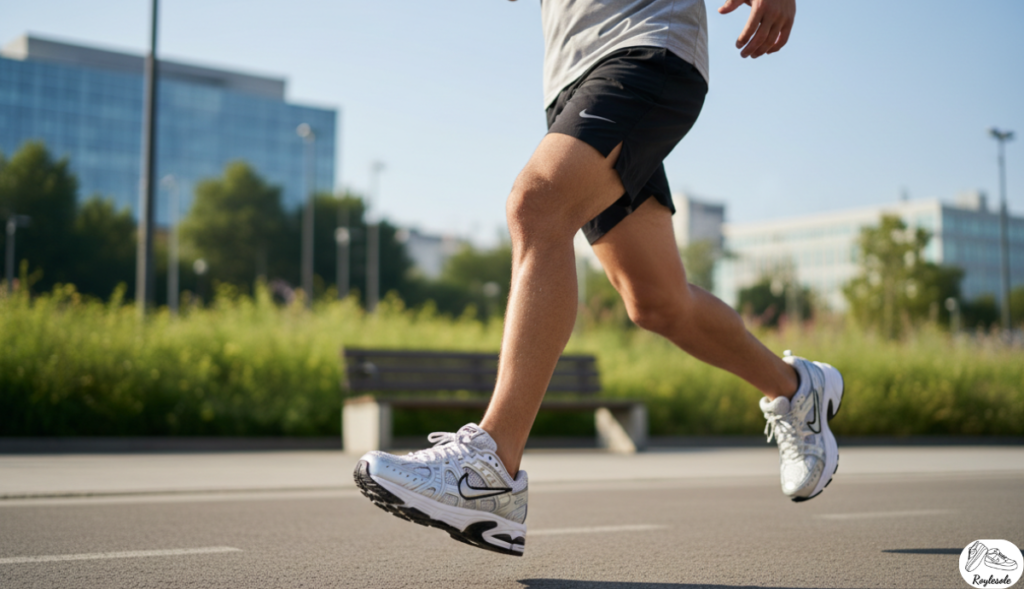
Cushioning in Nike P 6000 feels firm and stable. The midsole uses basic foam without advanced energy return. Short runs feel comfortable on smooth surfaces like roads. Longer runs may feel stiff and less forgiving. Cushioning suits walking more than repetitive running impact.
Modern running shoes use responsive foams for energy savings. Nike P 6000 lacks springy bounce during push off. Impact absorption works, but does not feel lively. Runners may notice leg fatigue during longer sessions. Cushioning quality affects enjoyment and injury risk.
Fit and Foot Support
Fit feels true to size for most casual wearers. The toe box offers moderate space for natural movement. Midfoot support comes from leather overlays and laces. Heel lockdown feels secure during walking and light jogging. Support suits for everyday use are better than intense running.
Arch support remains neutral without targeted stability features. Runners needing pronation control may feel unsupported. Flat-foot users may require custom insoles for comfort. Support level fits casual runners with neutral gait patterns. Serious runners usually need more structured support systems.
Weight and Running Efficiency
Nike P 6000 feels heavier than modern running shoes. Extra materials increase durability but reduce speed efficiency. Weight matters during longer runs and faster paces. Heavier shoes demand more energy with each step. This affects running form and endurance over time.
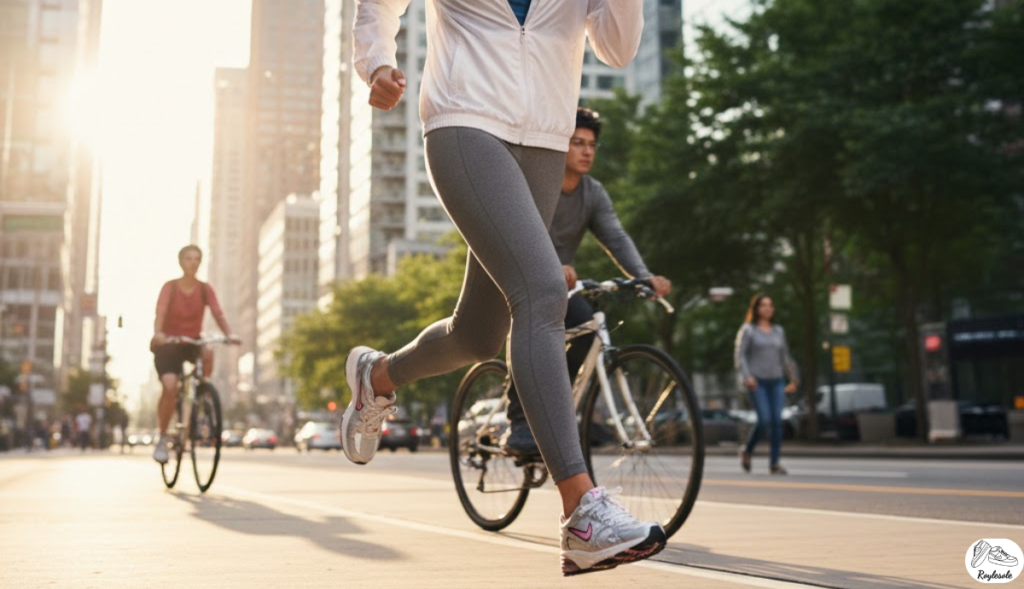
Lightweight shoes help runners maintain rhythm and speed. Nike P 6000 weight suits walking and short jogs. Efficiency drops during tempo runs or long distances. Casual runners may not notice weight issues immediately. Performance-focused runners will likely notice quickly.
Traction and Outsole Grip
Outsole rubber provides decent grip on dry pavements. Tread pattern works well for city streets, sidewalks, and paths. Wet surfaces reduce traction slightly but remain manageable. Trail running is not suitable due to the smooth areas. Grip supports casual movement more than aggressive running.
Running shoes often feature specialized rubber compounds. Nike P 6000 uses standard, durable rubber materials. Grip durability remains good for daily wear routines. Runners on varied terrain may feel limited confidence. Outsole design reflects lifestyle priorities, not trail performance.
Breathability and Comfort
The mesh upper allows airflow during warm-weather activities. Breathability feels adequate for short runs and walks. Thick overlays reduce airflow compared with pure mesh shoes. Sweat buildup increases during longer or hotter runs. Comfort remains acceptable but not exceptional for runners.
Padding around the collar and tongue feels soft and supportive. This padding adds comfort but also adds weight. Comfort suits all day wear more than racing needs. Runners value ventilation during intense efforts. Nike P 6000 balances comfort and style over airflow.
Durability and Daily Wear
Durability stands out as a strong point. Leather overlays protect high-wear areas effectively. Shoes handle daily walking, commuting, and errands well. Running impact accelerates wear but remains acceptable. Durability favors lifestyle use with occasional running.
Outsole rubber resists abrasion on concrete surfaces. Stitching and materials feel sturdy and long-lasting. Runners training daily may see faster midsole compression. Casual runners benefit from long lifespan value. Durability aligns with mixed-use expectations.
Performance for Short Runs
Short runs under three miles feel manageable and comfortable. Cushioning and support handle light jogging needs. Pace remains easy without speed-focused demands. Shoes perform best for relaxed recovery style runs. Beginners may enjoy a forgiving, stable ride initially.
Short runs reduce fatigue caused by shoe weight. Impact remains limited, keeping comfort levels acceptable. Form issues appear less during shorter distances. This use case fits Nike P 6000’s strengths. Performance meets basic running expectations for beginners.
Performance for Long Runs
Long runs reveal limitations in cushioning and responsiveness. Legs may feel tired due to the firm midsole. Weight becomes more noticeable after several miles. Energy return remains low, reducing running efficiency. Long-distance runners may prefer specialized models.
Foot heat and sweat increase during extended runs. Breathability limitations become more obvious over time. Support remains okay, but not optimized for endurance. Injury risk may increase without proper cushioning. Long runs clearly exceed the intended design purpose.
Comparison With True Running Shoes
True running shoes focus on biomechanics and energy return. Nike P 6000 prioritizes style, durability, and comfort. Running models use advanced foam plates and structures. These features reduce fatigue and improve speed. Comparison highlights different goals and user needs.
Running shoes feel lighter, bouncier, and more responsive. Nike P 6000 feels steady but less dynamic. Casual runners may accept this tradeoff easily. Competitive runners will notice performance gaps quickly. Understanding purpose helps choose appropriate footwear.
FAQ’s
Are Nike P 6000 good for beginners starting running?
Nike P 6000 suits beginners doing short, easy runs comfortably. They provide stable support and acceptable cushioning initially. Weight and firmness may limit progress over time. Beginners should monitor comfort and body feedback closely. Upgrading later may improve the running experience.
Can Nike P 6000 handle daily running training?
Daily running stresses cushioning and support systems heavily. Nike P 6000 lacks advanced foam durability for this use. Frequent runners may feel fatigue or discomfort sooner. Shoes may wear faster under daily impact. Dedicated running shoes suit daily training better.
Are Nike P 6000 good for treadmill running?
Treadmill running reduces impact and surface variation significantly. Nike P 6000 performs better on treadmills than outdoors. Cushioning feels adequate for controlled indoor sessions. Weight matters less on treadmills for many users. Short treadmill runs feel comfortable and safe.
Do Nike P 6000 cause injuries when running?
No shoe directly causes injuries without misuse factors. Poor fit, overuse, and weak support increase injury risk. Nike P 6000 may lack cushioning for long distances. Using them beyond limits may stress joints. Listen to pain signals and adjust accordingly.
Should runners choose Nike P 6000 over running models?
Choice depends on goals, frequency, and running seriousness. Nike P 6000 suits casual runners valuing style. Serious runners benefit from specialized running shoes. Running models enhance comfort, performance, and injury prevention. Match shoes with the intended activity honestly.
Conclusion
Nike P 6000 works for casual running and daily wear. It offers comfort, durability, and stable support for beginners. Short runs, walking, and lifestyle use suit it well. Design prioritizes style over advanced running technology. Knowing limits helps avoid disappointment or injury.
For serious running training, better options exist clearly. Nike P 6000 remains a versatile everyday shoe. It bridges fashion, comfort, and light activity nicely. Choose based on running goals, frequency, and distance. Honest expectations lead to better footwear decisions.






Post Comment