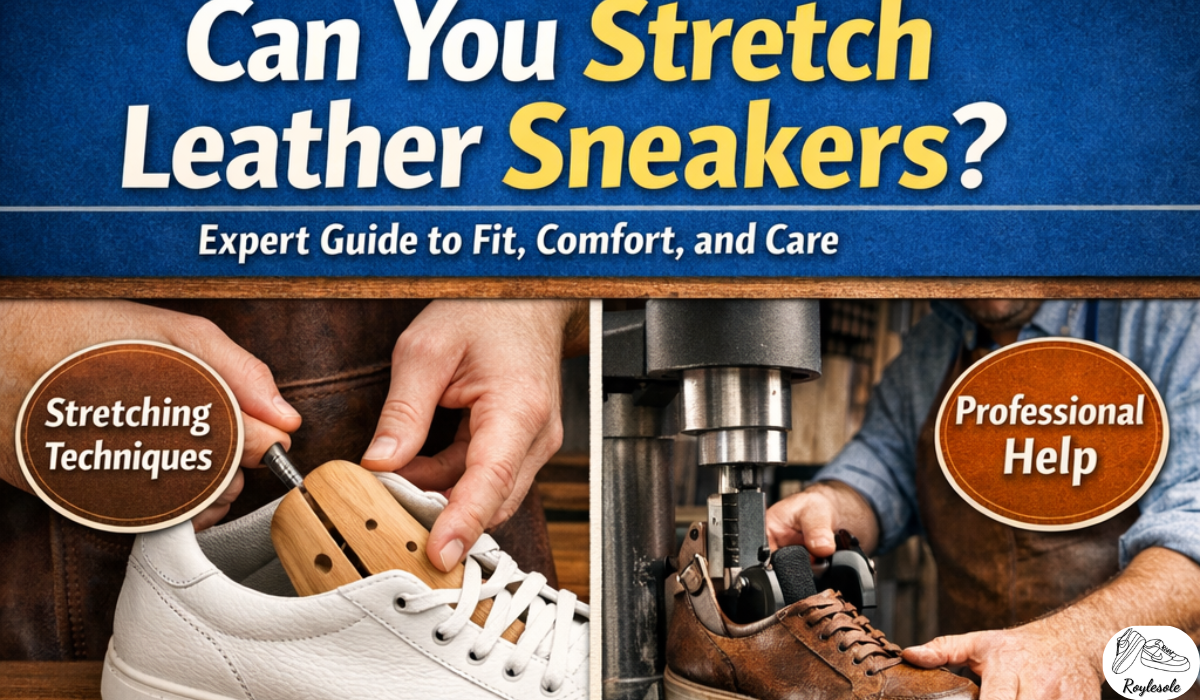
Can You Stretch Leather Sneakers? Expert Guide to Fit, Comfort, and Care
Sneakers combine comfort, style, and performance across modern daily lifestyles. They serve athletic, casual, and professional needs through evolving design innovations. Leather sneakers remain popular because durability, elegance, and versatility coexist. Many wearers question fit issues, especially tightness during initial ownership. Learn leather behavior helps consumers maintain comfort and sneaker longevity.
Leather sneakers often feel stiff when new, causing concern for buyers. This stiffness results from tanning processes, material thickness, and construction techniques. Unlike synthetic materials, leather changes shape gradually with use. Stretching possibilities depend on leather quality, moisture, and applied techniques. Knowing realistic expectations prevents damage and preserves footwear investment value.
Here, we explore whether leather sneakers can stretch safely and effectively. It explains methods, materials, limitations, and best care practices. Readers gain practical guidance for improving comfort without compromising structure. Clear explanations replace myths surrounding stretching leather footwear. The goal supports informed decisions, confident wear, and lasting satisfaction.
Table of Contents
Leather Properties in Sneakers
Leather originates from animal hides treated through controlled tanning processes. Tanning stabilizes fibers, creating strength, flexibility, and resistance against decay. Different tanning methods affect softness, stretch, and responsiveness to moisture. Full-grain leather behaves differently from corrected or bonded varieties. These distinctions influence how sneakers adapt during stretching attempts.
Leather consists of interwoven fibers, allowing limited movement under pressure. Heat, moisture, and motion temporarily relax these fibers, enabling adjustment. Excessive force risks fiber breakage, leading to cracks or deformities. Quality leather stretches subtly, not dramatically, preserving original shape. Understanding fiber behavior guides safer stretching expectations for wearers.
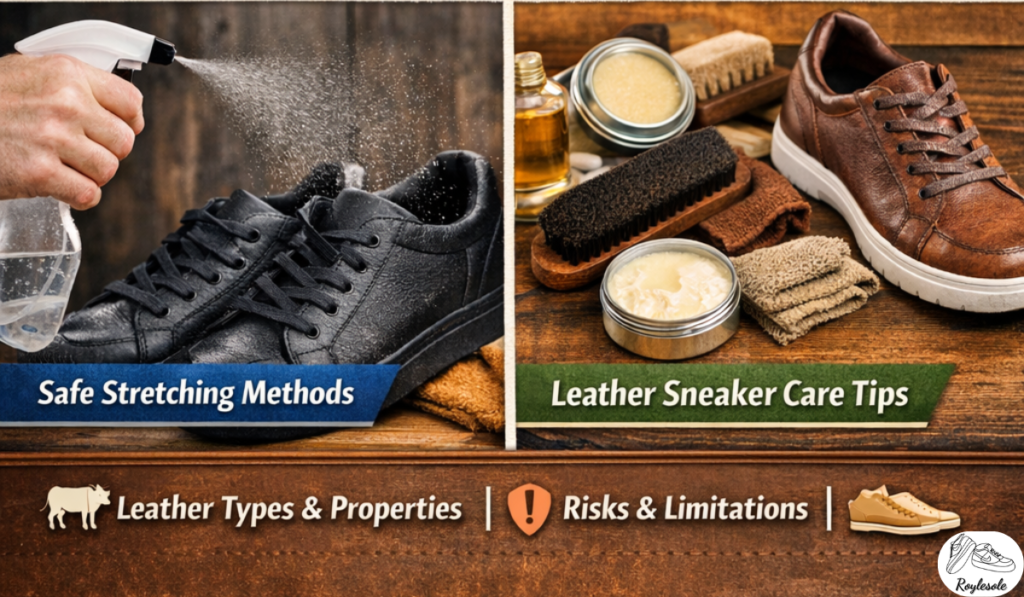
Types of Leather Used in Sneakers
Full-grain leather retains natural texture, offering durability and breathability. It stretches minimally but molds gradually with consistent wear patterns. Top grain leather undergoes surface sanding, improving softness and uniform appearance. This leather stretches slightly more easily than full-grain alternatives. Corrected leather sacrifices strength for appearance, affecting stretching reliability.
Suede and nubuck represent leather types with raised fiber surfaces. These materials stretch differently and stain easily during moisture exposure. Patent leather includes coatings severely limiting stretch potential. Knowing leather type helps select appropriate stretching methods safely. Incorrect methods can permanently damage delicate leather finishes.
Common Reasons Leather Sneakers Feel Tight
Manufacturing tolerances sometimes produce narrow toe boxes or tight uppers. Feet naturally swell throughout the day, increasing pressure inside sneakers. Thick socks, insoles, or orthotics reduce internal space significantly. New leather lacks flexibility, causing initial discomfort during movement. Improper sizing remains the most common cause of tightness complaints.
Foot shape variations include wide forefeet, high insteps, or bunions. Standard sneaker designs rarely accommodate all anatomical differences comfortably. Tightness often appears around toe joints, heel counters, or midfoot. Identifying pressure points informs targeted stretching approaches. Ignoring discomfort risks blisters, nerve irritation, and posture issues.
Can Leather Sneakers Stretch Naturally Over Time
Leather sneakers stretch naturally through repeated wear and foot movement. Body heat and moisture soften fibers, allowing gradual shape adaptation. This process typically occurs over several weeks of consistent use. Stretching remains limited, usually within a few millimeters of expansion. Natural stretching improves comfort but cannot correct severe sizing errors.
Walking patterns influence how leather molds around pressure areas. High stress zones like toes and insteps adapt more noticeably. Rest periods allow leather fibers to settle into new positions. Overuse without recovery can weaken the leather structure prematurely. Patience ensures safe adaptation without compromising sneaker integrity.
Manual Stretching Techniques for Leather Sneakers
Manual stretching involves applying controlled pressure to targeted areas. Hands or wooden shoe stretchers gently widen leather sections. Stretchers with adjustable knobs focus expansion around specific pressure points. Daily incremental adjustments reduce the risk of overstretching damage. This method suits mild tightness rather than significant size increases.
Wearing thick socks while walking indoors encourages gradual stretching. Movement combined with warmth helps the leather relax around the feet. Avoid excessive force, causing seams to strain or tear. Consistency matters more than intensity for successful manual stretching. Stop immediately if cracking, creasing, or discomfort appears.
Using Moisture and Heat to Stretch Leather
Moisture temporarily softens leather fibers, increasing pliability during stretching. Lightly dampening tight areas prepares sneakers for controlled expansion. Heat from walking or warm air enhances moisture effectiveness. Avoid soaking leather, which weakens the structure and promotes staining. Moderation ensures fibers relax without irreversible damage.
Some use hair dryers cautiously while wearing thick socks. Warm air should remain gentle and evenly distributed. Excessive heat dries leather, causing brittleness and cracking. Always condition leather afterward to restore oils and flexibility. This technique requires caution and attentive monitoring throughout the process.
Professional Stretching Services and Tools
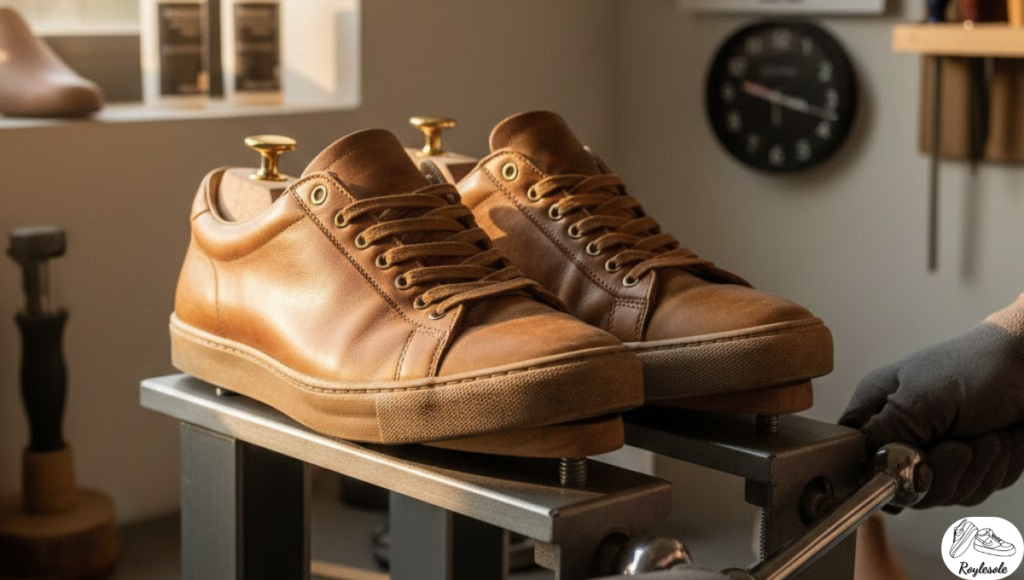
Cobblers offer professional stretching using specialized equipment and experience. They assess leather type structure and feasible expansion limits. Professional services reduce the risk of damage compared to home methods. Costs remain reasonable compared to replacing premium leather sneakers. This option suits valuable footwear or significant fit challenges.
Industrial stretchers apply even pressure with controlled moisture application. Cobblers target specific zones like toe boxes or insteps. Professional stretching achieves precise results difficult at home. Turnaround times usually range from one to three days. Consultation ensures expectations align with realistic outcomes.
Risks and Limitations of Stretching Leather Sneakers
Stretching leather sneakers carries inherent risks when improperly executed. Overstretching distorts shape, weakens seams, and reduces support. Leather may stretch unevenly, causing asymmetry and discomfort. Some leathers resist stretching regardless of applied techniques. Understanding limitations prevents irreversible damage and disappointment.
Patent-coated or synthetic blended leathers rarely stretch effectively. Excess moisture encourages mold growth and unpleasant odors. Heat misuse leads to cracking, discoloration, and stiffness. Aggressive methods void warranties and reduce resale value. Responsible approaches prioritize preservation over aggressive expansion.
Preventing Fit Issues When Buying Leather Sneakers
Proper sizing begins with measuring feet later in the day. Trying sneakers with intended socks ensures a realistic fit assessment. Allow space for toe movement without heel slippage. Consider width options or brands known for accommodating shapes. In-store walking tests reveal potential pressure points early.
Leather softness varies between brands, models, and collections. Choosing supple leather reduces break-in discomfort significantly. Return policies allow exchanges if tightness persists. Avoid purchasing extremely tight sneakers, expecting dramatic stretching. Prevention remains easier than corrective stretching after purchase.
Caring for Stretched Leather Sneakers
Conditioning leather maintains elasticity after stretching procedures. Quality conditioners replenish oils lost during moisture or heat exposure. Regular cleaning prevents dirt from stiffening stretched areas. Proper storage using shoe trees preserves shape and fit. Care routines extend comfort and sneaker lifespan significantly.
Rotate sneakers, allowing leather recovery between wears. Avoid prolonged exposure to extreme temperatures or humidity. Inspect seams and uppers for stress signs regularly. Address minor issues promptly before worsening occurs. Maintenance ensures stretched sneakers remain comfortable, supportive, and attractive.
FAQ’s
Can all leather sneakers be stretched effectively?
Not all leather sneakers stretch equally due to material differences. Full-grain and top-grain leathers offer limited adaptability. Patent or coated leathers resist stretching significantly. Understanding leather type sets realistic expectations. Professional advice helps determine feasibility accurately.
How much can leather sneakers realistically stretch?
Leather sneakers typically stretch only a few millimeters. This small change improves comfort rather than size correction. Stretching accommodates pressure points, not length discrepancies. Expect gradual, subtle improvements over time. Excessive expectations risk damage and dissatisfaction.
Is stretching leather sneakers at home safe?
Home stretching is safe when done gently and patiently. Manual methods and thick sock wear work best. Avoid soaking or overheating leather materials. Monitor sneakers closely for stress signs. Stop immediately if damage appears.
How long does natural stretching take with regular wear?
Natural stretching occurs over several weeks of consistent wear. Leather responds to heat, moisture, and movement gradually. Daily short wear sessions encourage safe adaptation. Results vary depending on leather quality. Patience yields the best outcomes.
When should I seek professional stretching services?
Professional stretching suits expensive or structurally complex sneakers. Significant tightness around toes or insteps benefits most. Cobblers assess feasibility and apply precise techniques. This option reduces the risk of permanent damage. Consult professionals when unsure about home methods.
Conclusion
Leather sneakers can stretch modestly when approached carefully and realistically. Understanding leather types, properties, and limitations guides effective methods. Natural wear manual techniques, moisture, and professional services offer options. However, stretching cannot compensate for severely incorrect sizing choices. Informed strategies protect sneaker integrity while enhancing comfort gradually.
Prioritizing proper fit selection remains the best long-term solution. Stretching serves as a supplementary adjustment rather than a primary fix. Responsible methods balance patience, caution, and ongoing leather care. Well-maintained leather sneakers reward wearers with lasting comfort. Knowledge empowers confident decisions, preserving both feet and footwear.





Post Comment