How Often Should You Get New Sneakers? Replacement Guide
Sneakers wear out faster than people expect from daily use. Knowing replacement timing helps protect feet, joints, posture, and performance. Many factors influence the Purchase of New sneakers, including usage intensity, surface, and materials. Ignoring worn sneakers increases the risk of injury, discomfort, fatigue, and reduced support. Learn replacement signs ensures comfort, safety, durability, and long-term foot health.
People often delay replacing New New sneakers due to cost concerns. However, worn sneakers quietly compromise biomechanics and movement efficiency. Regular assessment prevents gradual damage affecting knees, hips, and backs. Sneakers function as protective equipment, not permanent wardrobe items. Replacing New Sneakers promptly supports active lifestyles, productivity, and physical well-being.
Here we explain how often you should get new sneakers. It covers activity types, wear indicators, materials, and personal habits. Clear explanations help readers make informed, confident replacement decisions. Practical advice supports athletes, walkers, workers, and casual wearers alike. Following guidance maximizes comfort, performance, safety, and long-term value.
Table of Contents
Sneaker Lifespan Basics
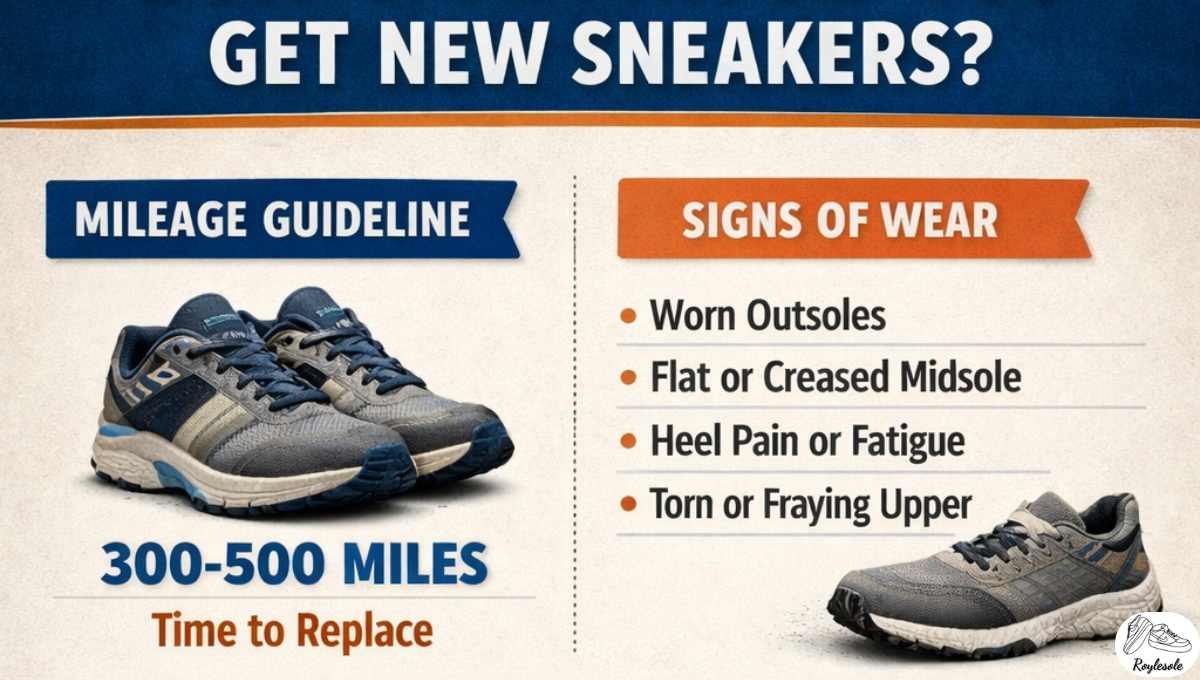
New Sneaker lifespan depends on construction quality and intended purpose. Most New sneakers last between three hundred and five hundred miles. Mileage matters more than calendar age for active users. Casual wearers experience a slower breakdown compared with runners. Learn basics helps set realistic replacement expectations early.
Materials degrade gradually through compression, friction, moisture, and stress. Midsoles lose cushioning long before uppers appear damaged. Outsoles wear unevenly based on gait patterns and surfaces. Adhesives weaken over time, reducing structural integrity. These changes silently reduce comfort, stability, and injury protection.
How Running Frequency Affects Replacement Timing
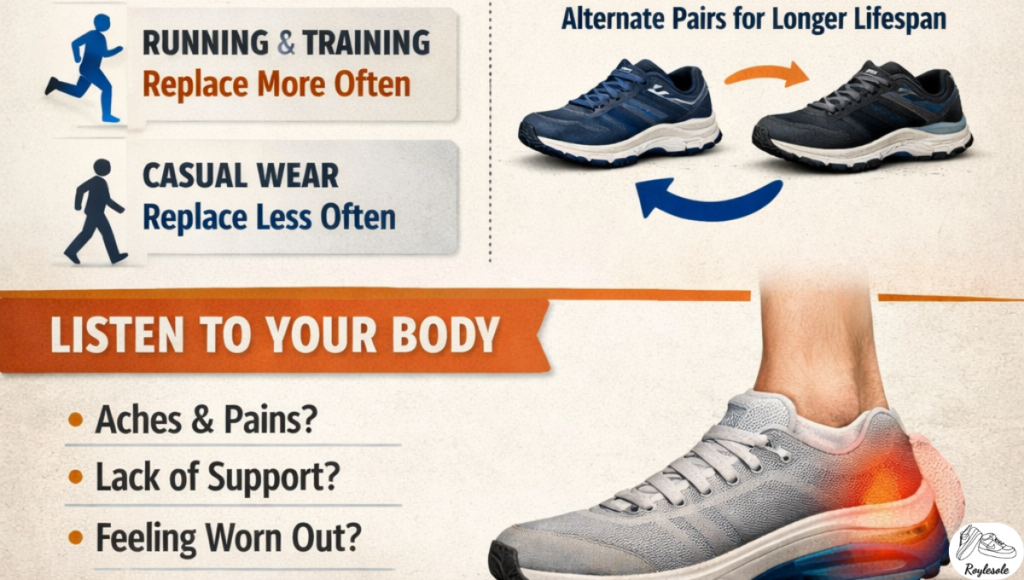
Frequent running accelerates sneaker wear significantly over short periods. Daily runners compress cushioning faster than occasional joggers. High mileage quickly reduces shock absorption and energy return. Performance declines subtly, often unnoticed until discomfort appears. Tracking mileage helps determine optimal replacement with New Sneakers schedules accurately.
Running style also affects wear patterns and longevity. Heel strikers stress the rear cushioning more intensely. Forefoot strikers compress the front midsoles repeatedly during push-off. Uneven wear signals altered mechanics requiring earlier replacement. Listening to body feedback prevents overuse injuries effectively.
Walking and Casual Use Considerations
Walking in new sneakers lasts longer due to lower impact forces. Casual daily wear still causes gradual material fatigue. Standing jobs compress cushioning through prolonged static loading. Urban surfaces accelerate outsole wear faster than indoor environments. Even walking in new sneakers requires periodic evaluation for support loss.
Many people underestimate casual sneaker wear. Visual appearance often masks internal cushioning breakdown. Discomfort, foot fatigue, or soreness indicate declining performance. Rotating pairs extends lifespan and improves daily comfort. Regular checks prevent unnoticed degradation affecting posture.
Athletic Training and Cross-Training Demands
Training in new sneakers experiences varied stresses from multidirectional movements. Lateral motions strain the sidewalls and stability components heavily. Cross-training accelerates wear compared with single-activity usage. Support features degrade unevenly under diverse movement patterns. Athletes should replace trainers sooner than casual users.
Sport-specific new sneakers address unique demands and stress points. Using the wrong shoes increases wear and injury risks. Training volume dictates replacement frequency more than appearance. Tracking training hours offers useful replacement guidance. Consistent evaluation ensures safety during intense workouts.
Material Quality and Construction Differences
High-quality materials generally extend the new sneaker’s lifespan modestly. Premium midsoles resist compression longer than cheaper alternatives. However, all cushioning materials eventually break down. Durability varies widely between brands and model designs. Learn materials help manage realistic expectations effectively.
Foam density, rubber compounds, and stitching influence longevity in new sneakers. Breathable uppers may fray before cushioning fails. Heavy-duty outsoles last longer on abrasive surfaces. Weight reduction often sacrifices durability for performance benefits. Choose materials aligning with usage intensity and the environment.
Signs Your Sneakers Need Replacement with new sneakers
Visible wear provides clear replacement signals with new sneakers. Smooth outsoles reduce traction and increase slipping risks. Creased midsoles indicate compressed cushioning beyond recovery. Upper tears compromise foot containment and stability. Structural breakdown warrants immediate replacement consideration.
Physical discomfort often appears before obvious visual damage. New aches, blisters, or fatigue signal declining support. Uneven soreness suggests altered gait from worn cushioning. Persistent discomfort should never be ignored. Your body reliably detects failing footwear earlier.
Age Versus Usage: Which Matters More
Usage matters more than age for active sneakers. Stored sneakers still degrade slowly over time. Foams harden and lose elasticity even when unused. Climate conditions accelerate aging during storage. Both age and mileage influence replacement timing.
Infrequently used sneakers may last several years. However, old, unused shoes can fail unexpectedly. Testing cushioning responsiveness helps assess aging effects. Cracking, stiffness, or odor indicate material breakdown. Replace aged sneakers before heavy activity resumes.
Surface and Environment Impact
Running surfaces dramatically affect sneaker wear rates. Concrete and asphalt accelerate outsole abrasion significantly. Trails introduce moisture, dirt, and uneven stresses. Indoor surfaces reduce impact and extend lifespan. Environmental exposure influences durability considerably.
Weather conditions also affect material longevity. Heat softens adhesives and accelerates foam breakdown. Moisture promotes bacterial growth and material weakening. Proper drying extends sneaker usability. Environment-aware usage prolongs shoe performance.
Rotating Sneakers for Extended Use
Rotating sneakers reduces daily stress on individual pairs. Rest periods allow midsoles to rebound partially. Multiple pairs distribute mileage more evenly. Rotation improves hygiene and reduces odor buildup. This strategy extends functional lifespan significantly.
Athletes often rotate between training and recovery shoes. Different designs reduce repetitive stress patterns. Rotation enhances comfort and performance consistency. Budget-conscious users benefit from longer replacement intervals. Simple rotation habits maximize footwear investment value.
Choosing Replacement Timing Strategically
Planning replacements prevents sudden performance drops. Monitoring mileage and wear indicators ensures timely action. Replacing early reduces injury risks and discomfort. Waiting too long increases cumulative biomechanical stress. Strategic timing balances cost, safety, and performance.
Set reminders based on activity levels and usage patterns. Keep notes on purchase dates and estimated mileage. Evaluate comfort regularly during workouts or daily wear. Proactive replacement supports long-term foot health. Consistency prevents surprises and unnecessary injuries.
FAQ’s
How often should runners replace their sneakers, typically?
Most runners replace with new sneakers every three hundred to five hundred miles. Frequency depends on body weight, running style, and surfaces. High-mileage runners may replace shoes every few months. Tracking distance helps determine accurate replacement timing. Comfort changes often signal the necessity earlier.
Can casual wear new sneakers last longer than running shoes?
Yes, casual sneakers generally experience lower impact stresses. Walking and daily wear compress cushioning more slowly. However, standing jobs still cause a gradual breakdown. Regular checks ensure support remains adequate. Casual sneakers still require eventual replacement.
Do expensive sneakers last longer than cheaper ones?
A higher price often reflects better materials and construction. Premium foams resist compression longer than budget options. However, usage intensity still determines lifespan primarily. No sneaker lasts indefinitely, regardless of cost. Fit and usage matter more than price.
Is it bad to wear old sneakers occasionally?
Occasional wear usually poses minimal risk. However, degraded cushioning may still affect comfort. Old sneakers can fail unexpectedly during intense activity. Inspect the condition before using aged footwear. Avoid strenuous use with very old sneakers.
How can I tell if cushioning is worn out?
Pressing midsoles reveals firmness and reduced rebound. Persistent discomfort suggests diminished shock absorption. Uneven wear patterns indicate compromised support. Comparing with new shoes highlights differences clearly. Trust physical feedback when assessing cushioning condition.
Conclusion
Knowing how often to get new sneakers protects health. Usage patterns, materials, and surfaces determine replacement needs. Ignoring wear risks, injuries, discomfort, and reduced performance. Regular evaluation ensures continued support and cushioning. Timely replacement enhances comfort, safety, and long-term well-being.
Sneakers are functional tools requiring periodic renewal. Listening to your body provides reliable replacement cues. Tracking usage simplifies decision-making and budgeting. Replacing responsibly supports active, comfortable lifestyles. Smart timing maximizes value and physical performance outcomes.







Post Comment