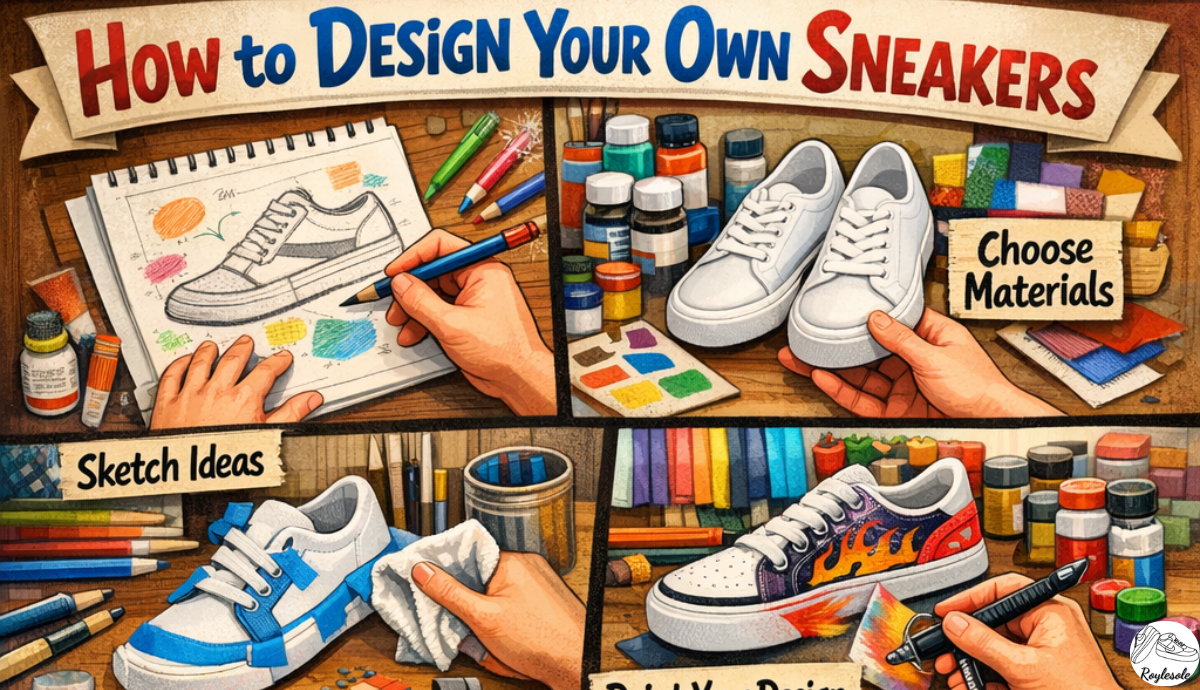
How to Design Your Own Sneakers
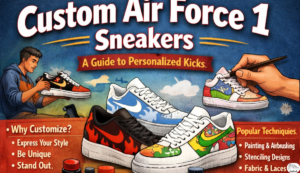
Designing your own sneakers allows you to express creativity fully. You can choose colors, patterns, and textures for unique designs. Materials, shapes, and techniques all affect how sneakers appear visually.
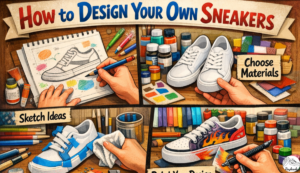
Custom sneakers require planning and understanding of shoe construction basics. Research brands, materials, and tools before beginning your creative project. Sketch your ideas on paper to visualize your dream design.
Personal style influences sneaker choices, so consider your daily lifestyle. Comfort and durability are important factors when designing footwear projects. Designing sneakers yourself can be fun, exciting, and fully rewarding.
Table of Contents
Gather All Necessary Materials For Sneaker Design Process Carefully
You will need paint, brushes, and cleaning supplies for preparation. High-quality markers, stencils, and masking tape help achieve precise lines. Sneaker blanks or old shoes make excellent starting points for design. Protective gloves and aprons keep your hands and clothes safe. Always organize your workspace to avoid mistakes and work efficiently.
Additional items include glue, fabric, and leather patches for decoration. Heat guns or sealants can enhance design longevity on surfaces. Sketching tools like pencils and erasers allow for creative corrections easily. Reference images help inspire unique patterns and original color combinations. Keep everything ready before beginning to avoid unnecessary delays or frustration.
Choose Your Sneaker Style And Base Shape Wisely
Decide if you want high-top, low-top, or slip-on sneakers. Each style offers a different canvas space for creative artwork purposes. Base color is important because it affects your final design. Neutral tones are easier to modify than extremely bright, bold colors. Pick comfortable, durable shoes for practical wear after designing work.
Canvas, leather, and synthetic materials react differently with the paints applied. Canvas absorbs paint well but may stretch and warp over time. Leather requires special paint and prep for proper color adhesion. Always test your materials on small areas before painting entirely. Choosing the right base ensures your design stays attractive longer.
Create A Clear Concept Before Starting Your Work
Sketch multiple versions of designs before selecting the final one. Consider combining colors, patterns, and textures for unique visual effects. Look at sneaker art online to inspire creative, original designs. Draw inspiration from personal experiences, hobbies, or favorite color combinations. Concept planning prevents mistakes and makes the creative process faster.
Decide if the design will be subtle, bold, or fully abstract. Choose complementary colors that blend well but still stand out nicely. Plan the placement of logos, patterns, and textures carefully across sneakers. A clear concept keeps your project organized and visually appealing. Preparation ensures each step of the design goes smoothly without mistakes.
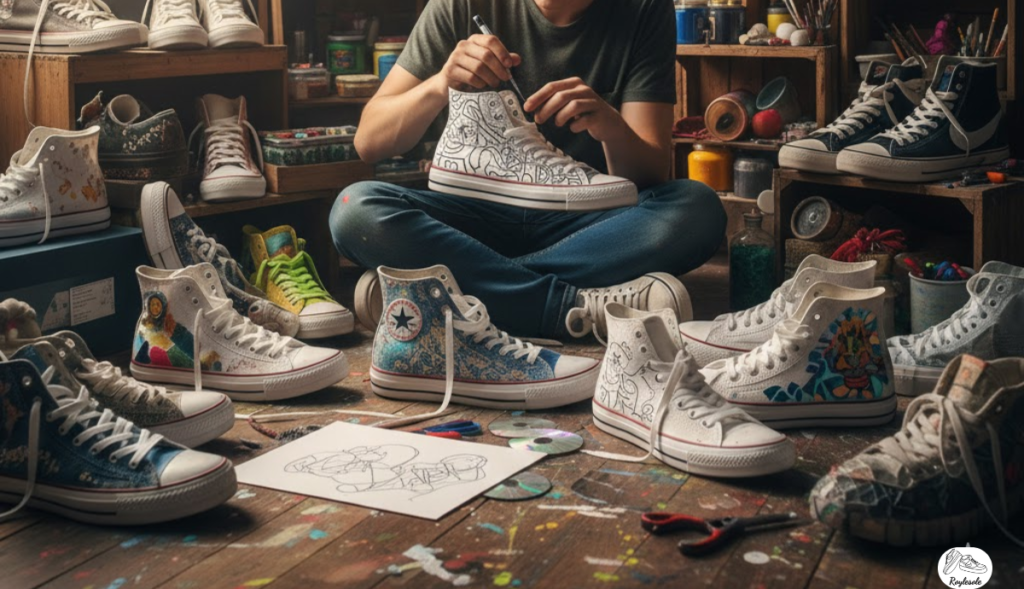
Prepare Sneakers Properly For the Painting And Decoration Process
Clean shoes thoroughly using mild soap and water before starting. Remove laces and insoles to reach every surface easily with tools. Dry sneakers completely to prevent paint from smearing or bleeding. Sanding smooths rough areas and helps paint adhere to surfaces. Tape off sections to prevent unwanted colors from overlapping your design.
Apply primer for leather or synthetic materials before painting carefully. Primer improves paint adhesion and ensures brighter colors in the final result. Use small brush strokes for even coverage across the entire shoe surface. Avoid rushing; patience is essential for professional-looking sneaker designs. Proper preparation guarantees a long-lasting, clean, and vibrant finished sneaker outcome.
Select Colors And Patterns That Reflect Personal Style Strongly
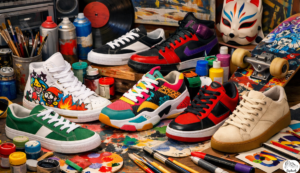
Decide on primary and secondary colors to maintain balance visually. Use complementary or contrasting shades for interesting, creative color combinations. Patterns like stripes, polka dots, or gradients add unique style. Experiment with abstract shapes for modern, trendy, or artistic appeal. Consider adding metallic or glow-in-the-dark paint for extra creativity.
Avoid overcrowding designs with too many colors or unnecessary patterns. Start small and gradually add complexity to your sneaker design. Balance each side of the shoe for symmetry or an intentional asymmetry effect. Try blending colors for smooth transitions using gentle brush strokes. Choosing colors thoughtfully makes sneakers visually appealing and uniquely personal.
Apply Techniques And Tools Carefully For Best Results
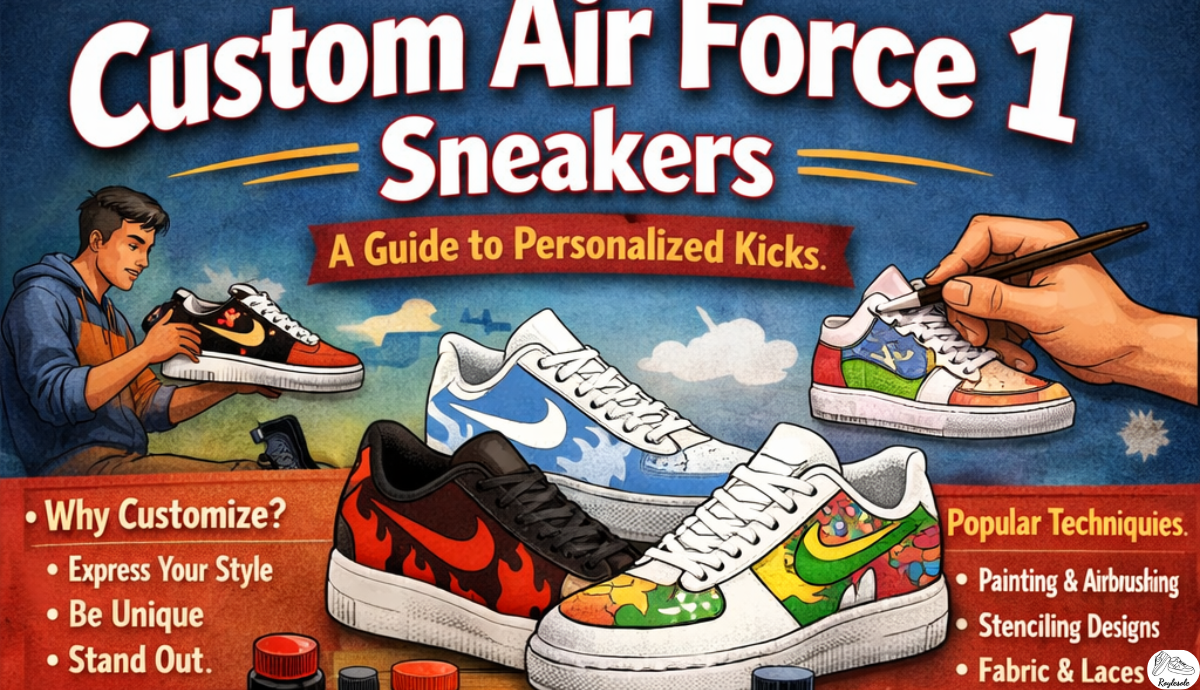
Brushes, markers, and airbrush tools all serve different creative purposes. Layering paint helps create depth, texture, and professional finishing effects. Spray techniques can cover large areas evenly without visible streaks. Sponges and stencils allow patterns, shapes, and textures with precision. Patience while applying layers avoids mistakes and ensures a smoother finish.
Use masking tape to protect areas not intended for paint. Experiment with dots, lines, and splatter effects for a modern look. Small corrections are possible with fine brushes or erasers after drying. Heat-setting paint improves durability and prevents cracks during wear. Combining techniques helps your sneakers stand out with original creative design.
Let Sneakers Dry Completely Between Each Layer Carefully
Drying between layers prevents colors from mixing unintentionally or bleeding. Avoid touching wet surfaces to keep the design crisp and sharp-looking. Patience is necessary because rushing will ruin your carefully painted sneakers. Use fans or natural air flow to accelerate the drying process safely. Always check that shoes are fully dry before adding additional layers.
Humidity and temperature affect drying time, so adjust the environment if necessary. Multiple thin layers give better results than a thick, uneven coating. Drying properly prevents cracks, fading, and damage to your finished design. Plan drying time into the project schedule to avoid unnecessary delays. Proper drying ensures your custom sneakers look professional and last longer.
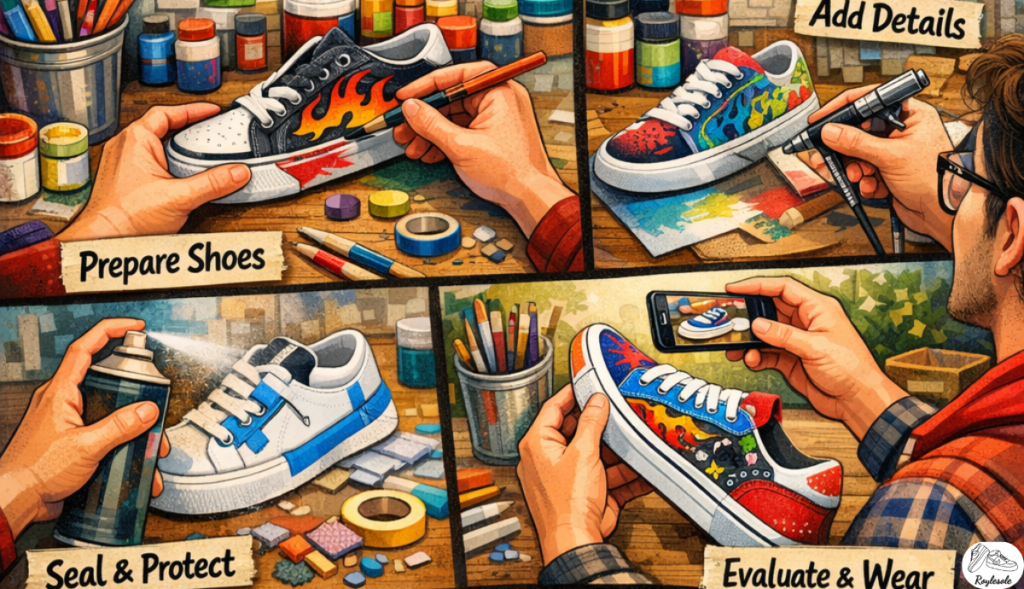
Add Finishing Touches And Protective Coating For Durability
Seal design with clear protective spray or varnish carefully applied. Protective coating preserves color, prevents scratches, and increases shoe longevity. Laces and insoles can be customized to match the new design perfectly. Adding small embellishments like studs or patches enhances a unique personal style. Final checks ensure every area of the sneaker looks clean and finished.
Avoid heavy coats of varnish that can make paint crack later. Use thin, even layers and allow drying completely between coats. Personalized details like initials or small logos make shoes one-of-a-kind. Clean any accidental smudges gently using a damp cloth or eraser. Finishing touches complete the design and make the sneakers ready for wearing.
Evaluate And Improve Sneaker With Constructive Feedback
Show your design to friends, family, or online communities honestly. Ask for suggestions on color balance, patterns, and overall aesthetics. Take notes on improvements and consider making small adjustments carefully. Feedback helps refine your skills and achieve professional-looking sneaker results. Constructive critique ensures your next custom sneaker project improves significantly.
Self-assessment is also valuable; check for symmetry and appeal. Take photos to see the design from different angles and lighting. Compare with reference images to identify areas needing improvement carefully. Document what worked and what failed for future sneaker design projects. Evaluation improves creative thinking and boosts confidence in custom sneaker designing.
Maintain And Care For Custom Sneakers Properly Over Time
Store sneakers in a dry, cool place away from direct sunlight. Clean shoes regularly using gentle brushes and mild soap carefully. Avoid wearing in harsh weather to prevent damage to the artwork’s design. Reapply protective coating occasionally to maintain color vibrancy and protection. Handle shoes gently when lacing or removing to avoid scratches accidentally.
Proper maintenance ensures your creative work lasts much longer, beautifully. Rotate shoes with others to avoid excessive wear on a single pair. Avoid harsh chemicals that could erode paint or materials quickly. Use shoe trees to maintain shape and prevent creasing during storage. Caring properly protects the investment of time, creativity, and original personal expression.
FAQ’s
What is the easiest material to paint on sneakers?
Canvas sneakers are easiest because paint adheres well and absorbs evenly.
Can I use regular acrylic paint on leather shoes?
Leather requires special acrylic paint that provides flexibility and durability.
How long should I let sneakers dry between layers?
Drying for at least two hours ensures paint doesn’t smudge accidentally.
Do I need a protective coating for a custom sneaker shape?
Yes, protective coating preserves paint, prevents scratches, and prolongs lifespan.
Can I remove mistakes without ruining the sneaker artwork completely?
Small corrections are possible with erasers, fine brushes, or touch-ups, carefully.
Conclusion
Designing your own sneakers allows self-expression and creativity to be fully realized. Careful planning, preparation, and techniques produce professional and long-lasting results.
Experiment with colors, patterns, textures, and materials to develop style. Maintaining sneakers ensures designs remain vibrant, durable, and visually appealing always.


Post Comment