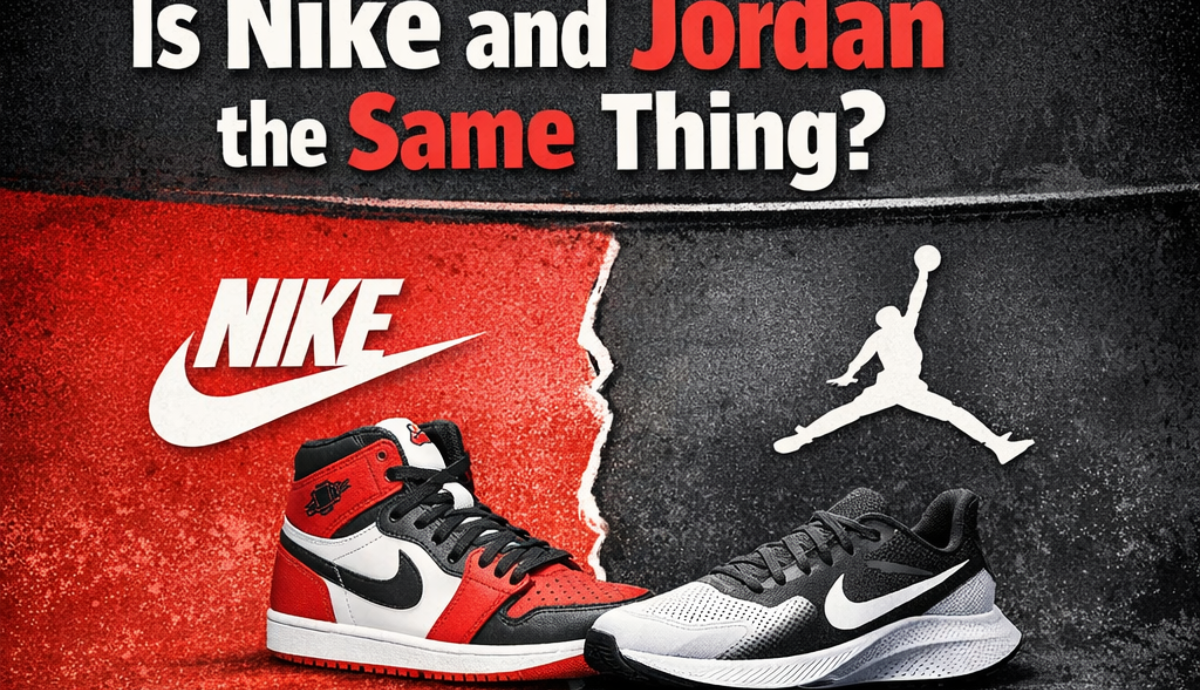
Is Nike and Jordan the same thing?
Many people often ask whether Nike and Jordan are the same. This question may seem simple, but history and branding make the answers interesting. Nike created Jordan Brand, yet each holds different meanings today. Understanding differences helps buyers choose shoes and clothing confidently. We explain connections using clear facts and easy language for Nike and Jordan
Nike is a large sports company selling shoes, clothes, and gear worldwide. Jordan began as a player inspired by a basketball legend. People perceive logos differently and associate emotions with Nike and Jordan. Some think Jordan works alone, while others know Nike owns it. Learning Nike and Jordan history clears confusion and builds smart buying choices.
We explore ownership, design culture, marketing, and product differences of Nike and Jordan. It shows how Nike supports Jordan while letting creativity grow. We explain why Nike and Jordan feel separate despite a strong business connection. You will see how sports history shaped modern fashion trends. By the end, answers feel clear, simple, and helpful for readers.
Table of Contents
History of Nike and Jordan Brand
Nike started earlier, building a reputation through athletes’ innovation and marketing. The company focused on performance running, basketball, and lifestyle products. Nike signed many athletes, creating signature shoes across the sports industry. This strategy helped Nike grow into a global sportswear leader. Brand trust increased through quality, consistent messaging, and athlete partnerships.
Jordan Brand began when Nike partnered with basketball star Michael Jordan. The first Air Jordan shoe was released during Jordan’s rookie season. Its bold design broke league rules, creating instant media attention. Nike paid fines, happily gaining massive publicity and sales growth. This moment started Jordan Brand’s legendary story within Nike.
Ownership and Business Structure
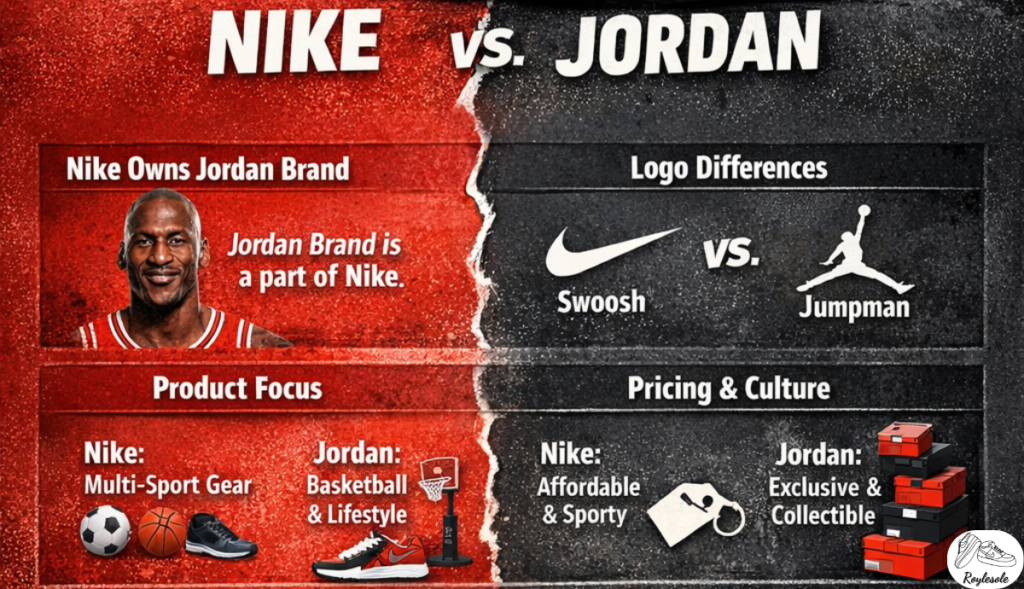
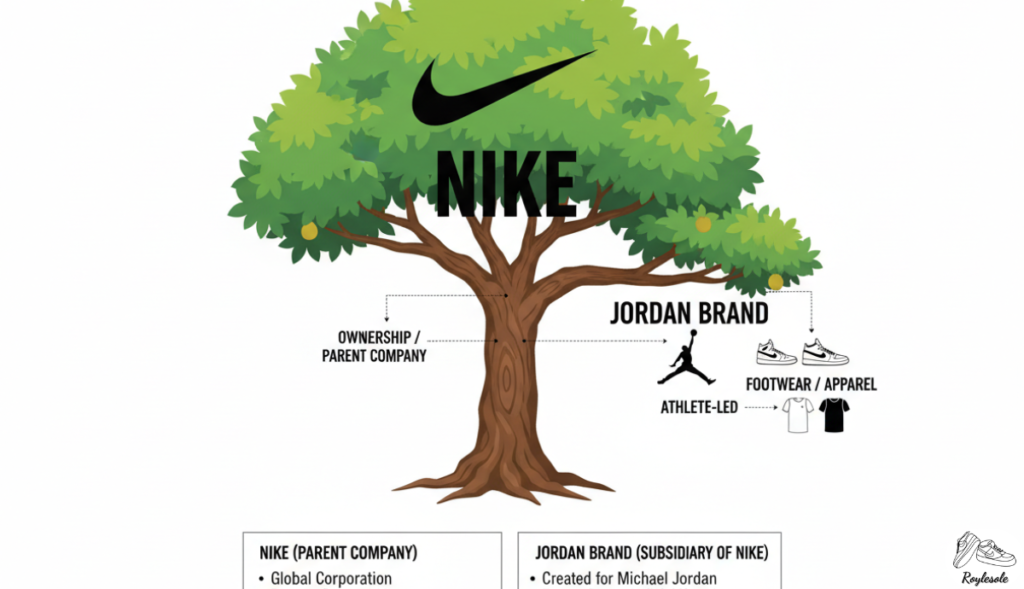
Nike fully owns Jordan Brand as a subsidiary business unit. All manufacturing, distribution, and finances flow through Nike systems. Jordan Brand operates independently in style marketing decisions. This structure allows creative freedom while ensuring strong corporate support for Nike and Jordan. Ownership remains with Nike despite Jordan Brand’s separate public identity.
Michael Jordan receives royalties and holds significant creative influence. However, he does not own Jordan Brand entirely himself. Nike manages supply chains, factories, marketing budgets, and retail partnerships. This ensures consistent quality and global availability for consumers. Thus, Nike remains the parent company behind Jordan operations.
Nike and Jordan Identity and Logos
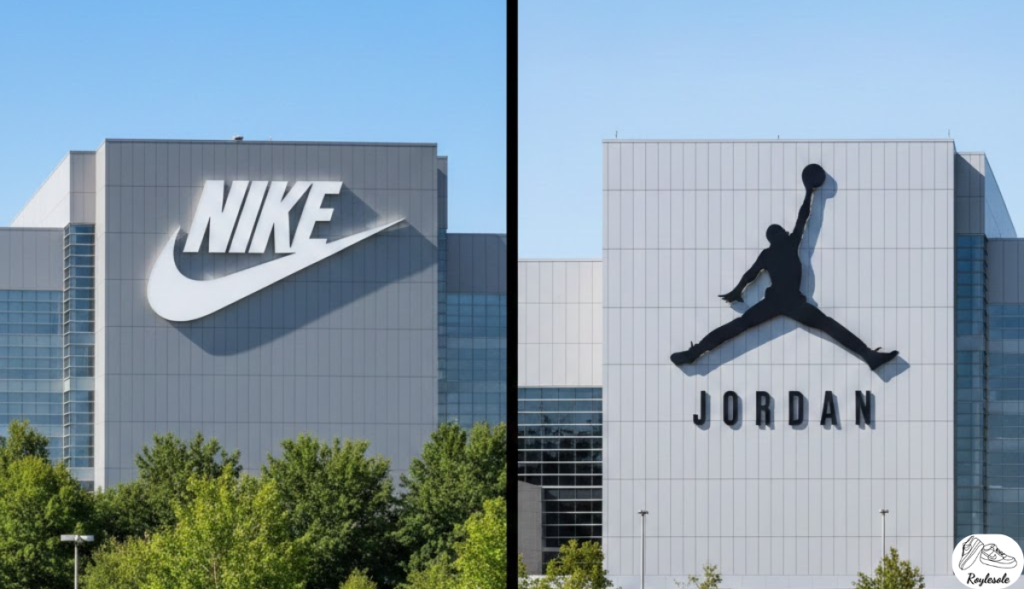
Nike uses the swoosh logo symbolizing motion, speed, and achievement. Jordan Brand uses the Jumpman logo featuring Michael Jordan dunking. Logos create emotional connections with fans worldwide. The Nike logo represents many sports beyond basketball culture. The Jumpman logo focuses strongly on basketball excellence and heritage.
These visual identities make Nike and Jordan feel separate in stores. Consumers recognize Jordan items instantly by their iconic silhouette. Nike products share design language across sports categories. Logos guide expectations about style, performance, and cultural meaning. Therefore, branding choices shape consumer perceptions significantly.
Product Design Differences for Nike and Jordan
Nike designs products for many sports, including running and soccer training. Jordan Brand focuses mainly on basketball footwear, apparel, and lifestyle. Jordan shoes often feature bold colors, premium materials, and unique shapes. Nike shoes sometimes prioritize lightweight comfort and versatility. Design goals differ while sharing technology resources internally.
Nike develops cushioning systems used across multiple product lines. Jordan Brand adapts these technologies to basketball needs. Examples include Air Zoom and Flyknit materials usage. Jordan designers add storytelling elements inspired by Michael Jordan. Thus designs feel personal compared to broader Nike collections.
Target Audience and Culture
Nike targets athletes of all levels and everyday fitness enthusiasts. Its messaging emphasizes motivation, personal growth, and performance improvement. Jordan Brand targets basketball fans, sneaker collectors, fashion focused youth. Culture around Jordan includes streetwear, music, and urban identity. This cultural focus makes Jordan feel exclusive and stylish.
Jordan Brand benefits from Michael Jordan’s legendary career achievements. Fans associate the brand with greatness, confidence, and competitive spirit. Nike appeals to a wider audience across ages, genders, and sports interests. Both brands inspire but speak differently to consumers. Audience focus influences marketing tone and product launches.
Marketing and Advertising Style
Nike marketing uses inspirational slogans like Just Do It. Campaigns feature diverse athletes sharing personal struggle stories. Nike ads aim to motivate action and self-belief. Jordan marketing highlights legacy championship moments and greatness imagery. Storytelling centers around a winning mentality and iconic basketball moments.
Jordan Brand releases limited products, creating hype and scarcity. Nike balances mass releases with occasional limited editions. Marketing strategies differ based on audience expectations. Both rely heavily on social media athlete endorsements and collaborations. Advertising style reinforces brand identities clearly.
Pricing and Market Position of Nike and Jordan
Nike offers a wide price range for different budgets. Products include entry-level shoes and premium performance models. Jordan Brand generally prices products higher due to exclusivity. Limited releases increase resale value among collectors. Pricing strategies reflect brand positioning and cultural demand.
Jordan sneakers often sell out quickly after release. Nike mass products remain widely available in stores. Consumers perceive Jordan as a luxury streetwear basketball brand. Nike feels accessible, versatile, and performance-focused. Price differences influence buying decisions strongly.
Retail and Distribution Channels
Nike sells products through online stores, apps, and outlets. Jordan Brand sells mainly through Nike channels and select retailers. Some Jordan releases appear only through the Nike SNKRS app. Controlled distribution builds excitement and manages demand. Retail strategies support brand value and exclusivity.
Nike outlets offer discounts, clearance, and seasonal promotions. Jordan items rarely appear discounted significantly. This maintains a premium image and resale market strength. Distribution differences reinforce perception of separate brands. Yet backend logistics remain shared within Nike systems.
Athlete Endorsements and Collaborations
Nike sponsors athletes across sports, including football, tennis, and athletics. Jordan Brand sponsors basketball players mainly in the NBA leagues. Some athletes wear Jordan gear exclusively on courts. Collaborations extend brand reach into fashion and culture. Both brands leverage endorsements for credibility and influence.
Jordan Brand collaborates with designers, musicians, and artists. Nike collaborates with technology firms, designers, and sports teams. These partnerships expand innovation and style boundaries. Collaboration choices reflect each brand’s cultural direction. Endorsements remain central to both brand successes.
Consumer Confusion and Clarification
Many consumers believe Nike and Jordan are separate companies. This confusion comes from different logos marketing styles and product focus. However ownership structure clearly places Jordan under Nike. Understanding this helps informed shopping and brand appreciation. Knowledge reduces myths spread through social media conversations.
People may choose Jordan for style or Nike performance needs. Both deliver quality backed by the same corporate resources. Confusion does not harm brand popularity significantly. Education simply improves transparency and trust. Clear facts help consumers make confident choices.
FAQ’s
Are Nike and Jordan the same company legally?
Nike legally owns Jordan Brand as a subsidiary within its corporate structure. Jordan Brand does not operate independently as a separate corporation. Nike manages finances, production, and distribution globally. Legal documents confirm Nike’s ownership clearly. Thus, they are connected legally.
Why do Jordan products feel more expensive than Nike?
Jordan products emphasize exclusivity, limited releases, and cultural demand. Higher prices reflect brand positioning and resale market influence. Nike offers broader pricing across mass markets. Jordan focuses on premium basketball and lifestyle consumers. Price differences align with brand strategy.
Does Michael Jordan own Jordan Brand?
Michael Jordan does not fully own Jordan Brand. He receives royalties and influences design and direction. Nike retains ownership and operational control. Jordan’s involvement remains significant but not ownership. This partnership benefits both parties.
Can Jordan products use Nike technology?
Jordan products regularly use Nike-developed technologies. Examples include Air cushioning and performance materials. Nike shares innovation across its brands. Jordan adapts technology for basketball performance. Technology sharing strengthens product quality.
Why do some Nike stores sell Jordan items?
Jordan Brand products are distributed through Nike retail channels. Shared ownership allows integrated sales systems. Select releases appear in specific stores or apps. This maintains control over brand image. Retail integration supports business efficiency.
Conclusion
Nike and Jordan are connected but not the same. Nike owns Jordan Brand and supports its operations fully. Jordan Brand maintains a unique identity rooted in basketball culture. Both brands share resources, technology, and business infrastructure. Understanding the relationship explains why products feel different.
Recognizing differences helps buyers match products with personal preferences. Nike offers broad athletic solutions for many activities. Jordan delivers basketball heritage style, exclusivity, and legacy. Together, they dominate sportswear culture worldwide. Knowing the truth removes confusion and adds appreciation.




Post Comment