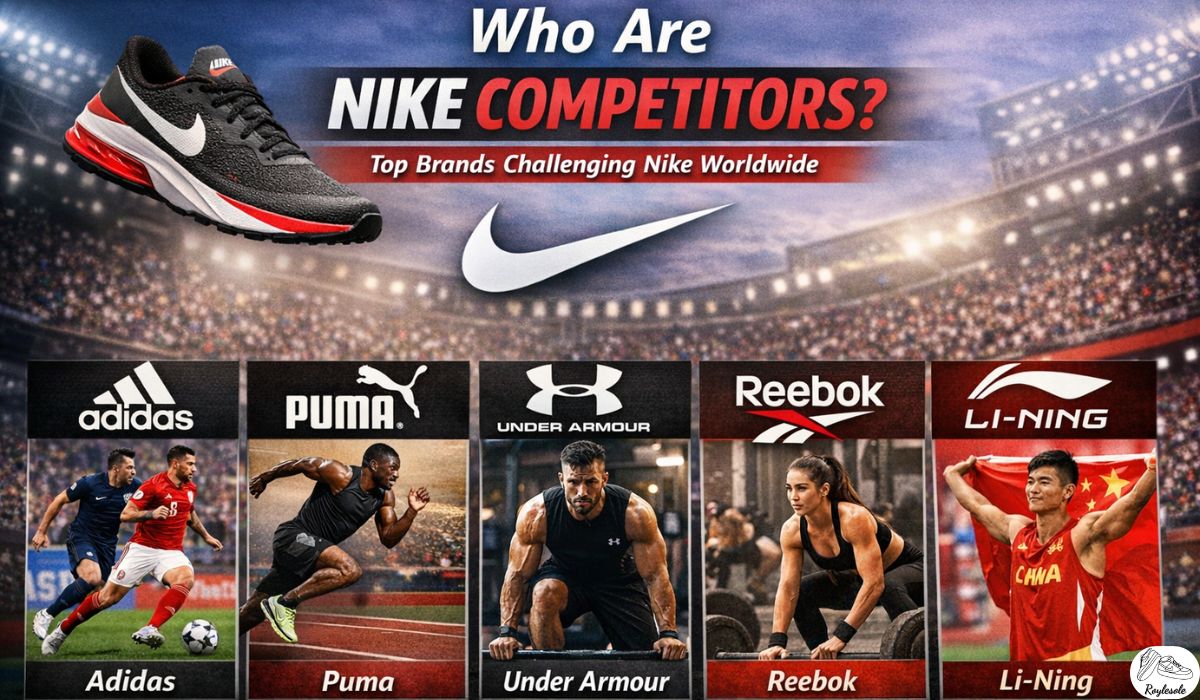
Who is Nike’s competitor? Top Brands Challenging Nike Worldwide
Nike stands among the biggest sports brands known across the world. Many people ask who competes with Nike in sports markets. Nike competitors include global brands making shoes, clothes, and equipment. These brands fight for athletes, fans, and everyday buyers. Knowing competitors helps understand Nike’s strengths and business direction.
Sportswear markets change fast with trends, tech, and youth culture. Nike leads often, yet strong rivals challenge market share daily. Competitors push Nike to improve design, comfort, pricing, and innovation. This rivalry benefits customers through better products and fair prices. Understanding rivals explains how Nike stays creative and competitive.
We explore Nike’s competitors across shoes, apparel, and gear. It explains what makes each rival strong and different. The focus stays clear, simple, and useful for readers. Examples cover global leaders and growing regional brands. By the end, the competition around Nike becomes easy to understand.
Table of Contents
Adidas
Adidas is Nike’s closest competitor in global sportswear markets today. The brand started in Germany and built strong athletic roots. Adidas focuses on comfort, performance, and classic style designs. Its three-stripe logo remains famous across sports and fashion. Adidas competes directly with Nike in shoes and clothing.
Adidas signs major athletes and teams worldwide for visibility. It invests heavily in soccer, basketball, and running categories. The brand blends sports performance with lifestyle fashion trends. Collaborations with designers help Adidas attract younger audiences. This strategy keeps Adidas competitive against Nike’s dominance.
Puma
Puma is another strong sports brand competing with Nike globally. It began as a German company with an athletic footwear focus. Puma targets speed, style, and performance in product design. The brand sponsors football clubs and track athletes worldwide. Puma often balances sport performance with casual street style.
Puma markets itself as bold, energetic, and youth-focused. Its shoes appeal to runners, footballers, and casual wearers. Celebrity partnerships increase brand visibility and cultural relevance. Puma’s pricing often undercuts Nike for value-seeking customers. This approach keeps Puma competitive in crowded sports markets.

Under Armour
Under Armour competes strongly with Nike in performance sportswear. The brand started with moisture-wicking athletic shirts. It focuses on serious athletes seeking performance improvement. Under Armour emphasizes training, fitness, and team sports categories. Its branding feels tough, focused, and competitive in tone.
Under Armour invests in technology fabrics and smart fitness gear. It sponsors athletes in basketball, football, and training sports. The brand competes with Nike through function-driven products. Pricing ranges attract both amateurs and professional athletes. This keeps Under Armour relevant in high-performance markets.
Reebok
Reebok is a well-known competitor in the fitness footwear market. The brand gained fame through aerobics and training shoes. Reebok focuses on gym workouts, CrossFit, and fitness lifestyles. It targets customers wanting practical, comfortable workout gear. Reebok competes with Nike mainly in training categories.
Reebok emphasizes simplicity and function over flashy designs. The brand appeals to fitness-focused and casual users. It collaborates with fitness communities to build loyalty. Reebok’s pricing often feels more affordable than Nike’s. This positioning helps Reebok survive competitive sportswear spaces.
New Balance
New Balance competes with Nike through comfort-focused athletic shoes. The brand is known for fit options and foot support. It appeals to runners, walkers, and lifestyle shoe buyers. New Balance avoids flashy marketing and focuses on quality. This builds trust with long-term loyal customers.
New Balance manufactures some shoes locally in select countries. It highlights craftsmanship and materials rather than hype culture. The brand competes strongly in running and casual categories. Many athletes choose New Balance for injury prevention benefits. This focus differentiates New Balance from Nike’s style-driven approach.
Asics
Asics is a strong competitor in the running shoe market globally. The brand began in Japan with health focused sports philosophy. Asics designs shoes based on science and body movement. Runners trust Asics for comfort, stability, and injury control. This reputation challenges Nike’s running shoe leadership.
Asics invests heavily in research and development labs. It focuses less on fashion and more on performance. The brand sponsors marathons and professional runners worldwide. Asics shoes often serve serious and long-distance runners. This specialization keeps Asics competitive despite Nike’s popularity.
Skechers
Skechers competes with Nike mainly in casual athletic footwear. The brand targets comfort, affordability, and everyday wear. Skechers appeals strongly to families and older customers. It focuses less on elite sports performance markets. This strategy separates Skechers from Nike’s athletic image.
Skechers uses aggressive pricing and wide retail availability. It invests in memory foam and comfort technologies. Celebrity endorsements support brand visibility without a heavy sports focus. The brand sells massive volumes through accessible designs. This commercial success challenges Nike in the lifestyle shoe segments.
Vans
Vans competes with Nike in youth and lifestyle footwear. The brand connects strongly with skateboarding and street culture. Vans focuses on simple designs and durable construction. It appeals to creative, relaxed, and independent-minded customers. This identity differs greatly from Nike’s athletic performance image.
Vans sponsors skate events, artists, and music communities. The brand thrives on authenticity and cultural loyalty. Its shoes often prioritize board feel over cushioning. Vans competes indirectly with Nike’s lifestyle shoe lines. This keeps Vans relevant within youth-driven footwear markets.
Converse
Converse competes with Nike in casual and lifestyle footwear. Interestingly, Nike owns Converse as a subsidiary brand. Converse maintains an independent style and cultural identity. Its Chuck Taylor shoes remain timeless and iconic worldwide. This brand targets fashion and self-expression markets.
Converse focuses less on performance sports competition. It appeals to musicians, artists, and creative youth. Simple designs allow wide customization and personal style. Converse indirectly competes with Nike’s lifestyle sneakers. This internal competition expands Nike’s overall market reach.
Li-Ning
Li-Ning is a major Nike competitor in Chinese markets. The brand was founded by a famous Olympic gymnast. Li-Ning focuses on national pride and athletic performance. It competes strongly in basketball and running categories. Chinese consumers increasingly support Li-Ning over foreign brands.
Li-Ning blends modern design with Chinese cultural elements. It sponsors domestic athletes and national sports teams. Pricing remains competitive against Nike in local markets. The brand expands globally through fashion and sports exposure. This growth makes Li-Ning a rising global competitor.
FAQ’s
Who is Nike’s biggest competitor?
Adidas is Nike’s biggest competitor in global sportswear markets. Both brands compete in shoes, apparel, and athlete sponsorships. They fight closely for market share worldwide. Adidas challenges Nike through soccer and lifestyle products. This rivalry drives constant innovation across both brands.
Does Nike compete only with sports brands?
Nike competes with sports and lifestyle footwear brands. Some competitors focus more on comfort or fashion. Brands like Vans and Skechers compete indirectly. These brands target different customer needs. This expands competition beyond traditional sportswear markets.
Why is Adidas strong against Nike?
Adidas has a strong global presence and soccer dominance. It blends sports performance with fashion collaborations. Adidas attracts younger buyers through lifestyle designs. The brand signs top athletes and teams. This makes Adidas Nike’s toughest rival.
Is Nike still the market leader?
Nike remains the leading sportswear brand worldwide. It holds a strong market share in shoes. Nike’s marketing power remains unmatched. Innovation keeps Nike ahead of many rivals. Leadership continues despite intense competition.
Are new brands challenging Nike today?
Yes, regional brands like Li-Ning are growing fast. Local pride supports these emerging competitors. They offer competitive prices and modern designs. Technology helps smaller brands scale quickly. This creates new challenges for Nike globally.
Conclusion
Nike faces strong competition from many global sportswear brands. Each competitor brings unique strengths in design, price, or performance. These brands push Nike to keep improving its products. Competition benefits athletes and everyday buyers worldwide. Understanding rivals explains Nike’s constant innovation and marketing.
Nike remains powerful, yet competitors continue growing and evolving. Brands like Adidas and Puma challenge Nike daily. Others focus on comfort, culture, or regional loyalty. Together, these rivals shape the global sportswear industry. Nike’s success depends on staying ahead of this competition.
Post Comment